White blood cell differential: Difference between revisions
CSV import Tags: mobile edit mobile web edit |
CSV import |
||
| Line 48: | Line 48: | ||
[[Category:Hematology]] | [[Category:Hematology]] | ||
[[Category:Medical tests]] | [[Category:Medical tests]] | ||
<gallery> | |||
File:Neutrophil - Band cell-1 (%2Blymphocytes).JPG|White blood cell differential | |||
File:Mononucléose infectieuse-7.JPG|White blood cell differential | |||
File:Stained peripheral blood smear closeup.jpg|White blood cell differential | |||
File:Sysmex WBC scattergrams.jpg|White blood cell differential | |||
File:Sysmex XT-4000i.jpg|White blood cell differential | |||
File:Hem1SegmNeutrophile3.jpg|White blood cell differential | |||
File:PBLymphozyt.jpg|White blood cell differential | |||
File:Hem1Monocyte.jpg|White blood cell differential | |||
File:Hem1Eosinophile.jpg|White blood cell differential | |||
File:PBBasophil.jpg|White blood cell differential | |||
File:Nonsegmented Neutrophile.jpg|White blood cell differential | |||
File:Hem1Myelocyte.jpg|White blood cell differential | |||
</gallery> | |||
Latest revision as of 01:07, 20 February 2025
Overview of the white blood cell differential test
White Blood Cell Differential[edit]
The white blood cell differential is a laboratory test that measures the percentage of each type of white blood cell (WBC) present in the blood. This test is a critical component of the complete blood count (CBC) and provides valuable information about the immune system and the body's ability to fight infection.
Types of White Blood Cells[edit]
White blood cells, also known as leukocytes, are a crucial part of the immune system. They are divided into five main types, each with specific functions:
Neutrophils[edit]
Neutrophils are the most abundant type of white blood cells, making up 50-70% of the total WBC count. They are the first responders to microbial infection and are essential in the body's defense against bacterial infections. Neutrophils are characterized by their multi-lobed nucleus and granular cytoplasm.
Lymphocytes[edit]
Lymphocytes account for 20-40% of the white blood cell count. They are primarily involved in the adaptive immune response. There are three main types of lymphocytes: B cells, T cells, and natural killer cells. B cells are responsible for antibody production, T cells are involved in cell-mediated immunity, and natural killer cells play a role in the destruction of virus-infected cells and tumor cells.
Monocytes[edit]
Monocytes make up 2-8% of the white blood cell count. They are the largest type of leukocyte and differentiate into macrophages and dendritic cells in tissues. Monocytes are involved in phagocytosis, antigen presentation, and cytokine production.
Eosinophils[edit]
Eosinophils constitute 1-4% of the white blood cell count. They are primarily involved in combating parasitic infections and play a role in allergic reactions. Eosinophils contain granules that are toxic to parasites and are involved in the inflammatory response.
Basophils[edit]
Basophils are the least common type of white blood cells, comprising less than 1% of the total WBC count. They are involved in allergic and antigen response by releasing histamine and other mediators. Basophils play a role in the body's response to allergens and are similar in function to mast cells.
Purpose of the Test[edit]
The white blood cell differential test is used to:
- Diagnose and monitor infections and inflammatory conditions.
- Evaluate the body's response to various treatments, such as chemotherapy.
- Detect blood disorders, such as leukemia and lymphoma.
- Monitor the immune system in conditions like HIV/AIDS.
Interpretation of Results[edit]
The results of a white blood cell differential are expressed as a percentage of each type of white blood cell. Abnormalities in the differential can indicate various medical conditions:
- Neutrophilia: An increase in neutrophils, often seen in bacterial infections, inflammation, and stress.
- Neutropenia: A decrease in neutrophils, which can occur in severe infections, bone marrow disorders, and as a side effect of certain medications.
- Lymphocytosis: An increase in lymphocytes, commonly associated with viral infections and certain leukemias.
- Lymphopenia: A decrease in lymphocytes, which may be seen in immunodeficiency disorders and after chemotherapy.
- Monocytosis: An increase in monocytes, which can occur in chronic infections and inflammatory conditions.
- Eosinophilia: An increase in eosinophils, often associated with allergic reactions and parasitic infections.
- Basophilia: An increase in basophils, which can be seen in allergic reactions and certain blood disorders.
Related Pages[edit]
-
 White blood cell differential
 -
 White blood cell differential
 -
 White blood cell differential
 -
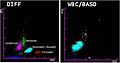 White blood cell differential
 -
 White blood cell differential
 -
 White blood cell differential
 -
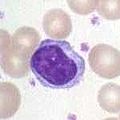 White blood cell differential
 -
 White blood cell differential
 -
 White blood cell differential
 -
 White blood cell differential
 -
 White blood cell differential
 -
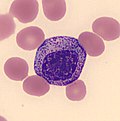 White blood cell differential
.JPG)


