Winter: Difference between revisions
CSV import |
CSV import |
||
| Line 42: | Line 42: | ||
File:2018_January_in_Helsinki_(46315524324).jpg|January in Helsinki 2018 | File:2018_January_in_Helsinki_(46315524324).jpg|January in Helsinki 2018 | ||
File:Siemiginowski_Allegory_of_Winter.jpg|Allegory of Winter by Siemiginowski | File:Siemiginowski_Allegory_of_Winter.jpg|Allegory of Winter by Siemiginowski | ||
</gallery> | |||
<gallery> | |||
File:Earth-satellite-seasons.gif|Winter | |||
File:KleinarlWinterwonderland.jpg|Winter | |||
File:Neve Caxias do Sul (2).jpg|Winter | |||
File:Hamburg Germany Jan 6.jpg|Winter | |||
File:Snowshoe hare.jpg|Winter | |||
File:Frost Fair of 1683.JPG|Winter | |||
File:IceAgeEarth.jpg|Winter | |||
File:2018 January in Helsinki (46315524324).jpg|Winter | |||
File:Siemiginowski Allegory of Winter.jpg|Winter | |||
</gallery> | </gallery> | ||
Revision as of 01:03, 20 February 2025
Winter is the coldest season of the year in polar and temperate zones. It occurs after autumn and before spring in each year. Winter is caused by the axis of the Earth in that hemisphere being oriented away from the Sun. Different cultures define different dates as the start of winter, and some use a definition based on weather. When it is winter in the Northern Hemisphere, it is summer in the Southern Hemisphere, and vice versa. In many regions, winter is associated with snow and freezing temperatures.
Etymology
The term winter comes from the Proto-Germanic word wintar which is taken from the Proto-Indo-European word wend, which translates as water.
Cause
The tilt of the Earth's axis relative to its orbital plane plays a big role in the weather. The Earth is tilted at an angle of 23.44° to the plane of its orbit, and this causes different latitudes on the Earth to directly face the Sun as the Earth moves through its orbit. It is this variation that primarily brings about the seasons.
Meteorological reckoning
Meteorological winter is the method of measuring the winter season used by meteorologists based on "sensible weather patterns" for record keeping purposes, so the start of meteorological winter can change.
Astronomical and other calendar-based reckoning
In the Northern Hemisphere, some use a definition based on weather, and define the start of winter as the winter solstice, the day of the year with the least daylight.
Ecological reckoning and activity
Winter is often defined by meteorologists to be the three calendar months with the lowest average temperatures. This corresponds to the months of December, January and February in the Northern Hemisphere, and June, July and August in the Southern Hemisphere.
Effects on human society
Winter weather has a number of effects on human activity, including agriculture, health risks such as hypothermia, disruption to infrastructure, and more.
Winter festivals
Winter has been a traditional season for snow and ice festivals due to the availability and abundance of these commodities, and is a time when Santa Claus and other mythical beings are said to bring gifts.
See also
 | |
|---|---|
 |
 |
-
 Earth satellite seasons
 -
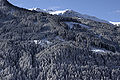 Kleinarl Winter wonderland
 -
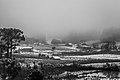 Snow in Caxias do Sul
 -
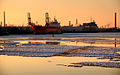 Hamburg, Germany in January
 -
 Snowshoe hare
 -
 Frost Fair of 1683
 -
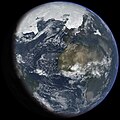 Ice Age Earth
 -
 January in Helsinki 2018
 -
 Allegory of Winter by Siemiginowski


.jpg)


.jpg)

-
Winter
-
Winter
-
Winter
-
Winter
-
Winter
-
Winter
-
Winter
-
Winter
-
Winter
