Β-Methyl-2C-B: Difference between revisions
CSV import |
CSV import |
||
| Line 29: | Line 29: | ||
{{pharmacology-stub}} | {{pharmacology-stub}} | ||
<gallery> | |||
File:BMB structure.png|Β-Methyl-2C-B | |||
</gallery> | |||
Latest revision as of 00:49, 20 February 2025
Β-Methyl-2C-B is a psychedelic drug of the 2C family. It was first synthesized by Alexander Shulgin. The full name of the drug is 2-(4-Bromo-2,5-dimethoxyphenyl)-N-methylpropan-2-amine.
Chemistry[edit]
Β-Methyl-2C-B is a substituted amphetamine that has a phenyl ring bound to an amino (NH2) group through an ethyl chain with an additional methyl substitution at Rα. The phenyl ring is substituted at R4 and R5 with a bromine and methoxy group respectively. The drug is the β-methyl analogue of 2C-B.
Pharmacology[edit]
The exact mechanism of action of Β-Methyl-2C-B is not well understood. However, it is believed to work primarily by acting as a serotonin receptor agonist. The drug has been shown to be a potent partial agonist for the 5-HT2A receptor, which is thought to be the primary target of the psychedelic effects of this class of drugs.
Effects[edit]
The effects of Β-Methyl-2C-B are similar to those of other psychedelic drugs, and include hallucinations, euphoria, altered thinking processes, closed and open eye visuals, synesthesia, an altered sense of time, and spiritual experiences. The effects can last for 6–10 hours, depending on dosage and other factors.
Toxicity and harm potential[edit]
The toxicity and long-term health effects of recreational Β-Methyl-2C-B use do not seem to have been studied in any scientific context and the exact toxic dosage is unknown.
Legal status[edit]
The legal status of Β-Methyl-2C-B varies from country to country. In many countries, it is a controlled substance, making its sale, purchase, or possession illegal.
See also[edit]

-
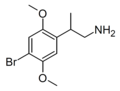 Β-Methyl-2C-B

