Space: Difference between revisions
CSV import Tags: mobile edit mobile web edit |
CSV import |
||
| Line 60: | Line 60: | ||
{{Astronomy-stub}} | {{Astronomy-stub}} | ||
<gallery> | |||
File:3D coordinate system.svg|3D Coordinate System | |||
File:Gottfried Wilhelm Leibniz, Bernhard Christoph Francke.jpg|Gottfried Wilhelm Leibniz | |||
File:GodfreyKneller-IsaacNewton-1689.jpg|Isaac Newton | |||
File:Immanuel Kant portrait c1790.jpg|Immanuel Kant | |||
File:Sphere closed path.svg|Sphere Closed Path | |||
File:Carl Friedrich Gauss.jpg|Carl Friedrich Gauss | |||
File:Young Poincare.jpg|Henri Poincaré | |||
File:Albert Einstein Head.jpg|Albert Einstein | |||
</gallery> | |||
Latest revision as of 00:36, 20 February 2025

== Space ==

Space refers to the vast, seemingly infinite expanse that exists beyond the Earth and between celestial bodies. It is a near-perfect vacuum, devoid of matter, and is where all astronomical objects and cosmic phenomena occur.
Characteristics of Space[edit]
Space is characterized by its lack of an atmosphere, which means it has no air to scatter light or carry sound. This results in a black sky, even during the day. The vacuum of space also means that it has extremely low pressure and temperature.
Regions of Space[edit]
Space is divided into several regions based on distance from the Earth:
- Geospace: The region of space near Earth, including the magnetosphere.
- Interplanetary space: The space within our Solar System, dominated by the Sun's influence.
- Interstellar space: The space between stars within a galaxy.
- Intergalactic space: The vast spaces between galaxies.
Exploration of Space[edit]
Human exploration of space began in the mid-20th century with the launch of artificial satellites and manned space missions. Notable milestones include:
- The launch of Sputnik 1 by the Soviet Union in 1957.
- The first human in space, Yuri Gagarin, in 1961.
- The Apollo 11 mission, which landed the first humans on the Moon in 1969.
Space Agencies[edit]
Several national and international space agencies are responsible for space exploration and research:
- NASA (National Aeronautics and Space Administration) of the United States.
- ESA (European Space Agency).
- Roscosmos (Russian Federal Space Agency).
- CNSA (China National Space Administration).
Importance of Space[edit]
Space exploration has led to numerous scientific and technological advancements. It has improved our understanding of the universe, contributed to the development of new materials and technologies, and inspired generations of scientists and engineers.
Space Phenomena[edit]
Space is home to a variety of phenomena, including:
See Also[edit]
References[edit]
External Links[edit]


-
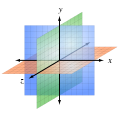 3D Coordinate System
 -
 Gottfried Wilhelm Leibniz
 -
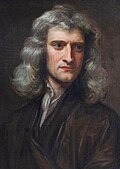 Isaac Newton
 -
 Immanuel Kant
 -
 Sphere Closed Path
 -
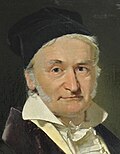 Carl Friedrich Gauss
 -
 Henri Poincaré
 -
 Albert Einstein


