Civil engineering: Difference between revisions
CSV import Tags: mobile edit mobile web edit |
CSV import |
||
| Line 35: | Line 35: | ||
[[Category:Engineering disciplines]] | [[Category:Engineering disciplines]] | ||
{{Engineering-stub}} | {{Engineering-stub}} | ||
<gallery> | |||
File:TVA_engineers_monitoring_Tellico_Dam_model.jpg|Civil engineering | |||
File:Leonhard_Euler_2.jpg|Leonhard Euler | |||
File:Pont_du_Gard_BLS.jpg|Pont du Gard | |||
File:Chichen_Itza_3.jpg|Chichen Itza | |||
File:John_Smeaton.jpg|John Smeaton | |||
File:Tkkstudentsbackinthedays.jpg|Civil engineering | |||
File:Akashi-kaikyo_bridge3.jpg|Akashi Kaikyo Bridge | |||
File:Oosterscheldekering,_Netherlands.JPG|Oosterscheldekering, Netherlands | |||
File:CBQreview.jpeg|Civil engineering | |||
File:Snapshot_of_earthquake-like_crash_testing.jpg|Civil engineering | |||
File:Creek_Water_Pollution.jpg|Civil engineering | |||
File:Soil-phase-diagram.svg|Civil engineering | |||
</gallery> | |||
Latest revision as of 12:22, 18 February 2025
Civil engineering is a professional engineering discipline that deals with the design, construction, and maintenance of the physical and naturally built environment, including works like roads, bridges, canals, dams, and buildings. Civil engineering is traditionally broken into a number of sub-disciplines. It is considered the second-oldest engineering discipline after military engineering, and it is defined to distinguish non-military engineering from military engineering.
History[edit]
Civil engineering takes place in the public sector from municipal through to national governments, and in the private sector from individual homeowners through to international companies. The earliest practice of civil engineering may have commenced between 4000 and 2000 BC in Ancient Egypt and Mesopotamia (Ancient Iraq) when humans started to abandon a nomadic existence, creating a need for the construction of shelter.
Sub-disciplines[edit]
Civil engineering is divided into a number of sub-disciplines including structural engineering, environmental engineering, and geotechnical engineering. Each of these disciplines requires a unique set of skills and knowledge.
Structural Engineering[edit]
Structural engineering involves the analysis and design of structures that support or resist loads. This includes buildings, bridges, towers, and even tunnels.
Environmental Engineering[edit]
Environmental engineering uses the principles of engineering, soil science, biology, and chemistry to develop solutions to environmental problems.
Geotechnical Engineering[edit]
Geotechnical engineering is an area of civil engineering concerned with the rock and soil that civil engineering systems are supported by.
Education and licensing[edit]
In most countries, a bachelor's degree in engineering represents the first step towards professional certification and the degree program itself is certified by a professional body. After completing a certified degree program, the engineer must satisfy a range of requirements including work experience and exam requirements before being certified.
See also[edit]
- Architectural engineering
- Construction engineering
- Earthquake engineering
- Forensic engineering
- Transportation engineering

-
 Civil engineering
 -
 Leonhard Euler
 -
 Pont du Gard
 -
 Chichen Itza
 -
 John Smeaton
 -
 Civil engineering
 -
 Akashi Kaikyo Bridge
 -
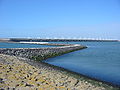 Oosterscheldekering, Netherlands
 -
 Civil engineering
 -
 Civil engineering
 -
 Civil engineering
 -
 Civil engineering


