Carnivorous plant: Difference between revisions
CSV import Tags: mobile edit mobile web edit |
CSV import Tags: mobile edit mobile web edit |
||
| Line 26: | Line 26: | ||
{{plants}} | {{plants}} | ||
{{botany-stub}} | {{botany-stub}} | ||
<gallery> | |||
File:Murud_N._lowii_20.jpg|Carnivorous plant | |||
File:H_chimantensis2.jpg|Carnivorous plant | |||
File:Darlingtonia_californica_ne8.JPG|Carnivorous plant | |||
File:Roraima_Brocchinia_reducta1.JPG|Carnivorous plant | |||
File:Pinguicula_conzattii_ne2.jpg|Carnivorous plant | |||
File:Drosera_capensis_bend.JPG|Carnivorous plant | |||
File:Carnivorous_Plant_Time_Lapse_(Drosera_Capensis)_"eating"_a_Fruit_Fly.ogv|Carnivorous plant | |||
File:Drosera_Glandular_Hair.jpg|Carnivorous plant | |||
File:Venus_Flytrap_showing_trigger_hairs.jpg|Carnivorous plant | |||
File:Snap,_Digest,_Absorb_-_How_the_Venus_flytrap_processes_prey_01.png|Carnivorous plant | |||
File:Uk_pond_bladderwort2.jpg|Carnivorous plant | |||
File:Genlisea_violacea_giant.jpg|Carnivorous plant | |||
</gallery> | |||
Latest revision as of 12:22, 18 February 2025
Carnivorous plants are a unique group of plants that capture and digest small animals and insects in order to derive nutrients from them. This is a significant adaptation as these plants typically grow in environments where the soil is poor in nutrients, particularly nitrogen, such as acidic bogs and rock outcroppings.
Classification[edit]
Carnivorous plants are found in the orders Nepenthales, Caryophyllales, Ericales, Lamiales, Oxalidales, Bromeliales, and Poales. The largest family of carnivorous plants is the Lentibulariaceae with over 300 species.
Mechanisms of Capture[edit]
Carnivorous plants use various mechanisms to capture their prey. These include pitfall traps (pitcher plants), flypaper traps (sundews and butterworts), snap traps (Venus flytrap), bladder traps (bladderworts), and lobster-pot traps (corkscrew plants).
Digestion and Absorption[edit]
Once the prey is captured, the plant produces digestive enzymes to break down the prey. The nutrients are then absorbed through the plant's cell membrane.
Conservation[edit]
Many species of carnivorous plants are threatened by habitat destruction and over-collection. Conservation efforts are being made to protect these unique plants.
See Also[edit]
References[edit]
<references />
| Plants | ||||||||||
|---|---|---|---|---|---|---|---|---|---|---|
This plants related article is a stub.
|

-
 Carnivorous plant
 -
 Carnivorous plant
 -
 Carnivorous plant
 -
 Carnivorous plant
 -
 Carnivorous plant
 -
 Carnivorous plant
 -
 Carnivorous plant
 -
 Carnivorous plant
 -
 Carnivorous plant
 -
 Carnivorous plant
 -
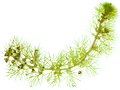 Carnivorous plant
 -
 Carnivorous plant


