Joseph Priestley: Difference between revisions
CSV import Tag: Manual revert |
CSV import |
||
| Line 36: | Line 36: | ||
[[Category:English writers]] | [[Category:English writers]] | ||
{{stub}} | {{stub}} | ||
<gallery> | |||
File:Joseph_Priestley.jpeg|Joseph Priestley | |||
File:Coat_of_Arms_of_Joseph_Priestley.svg|Coat of Arms of Joseph Priestley | |||
File:PriestleyBirthplace.jpg|Priestley Birthplace | |||
File:PriestleyGrammar.png|Priestley Grammar | |||
File:Priestley_Mary.jpg|Priestley Mary | |||
File:A_New_Chart_of_History.jpg|A New Chart of History | |||
File:Familiar_Introduction_to_Electricity_by_Joseph_Priestly,_plate_7.jpg|Familiar Introduction to Electricity by Joseph Priestley, plate 7 | |||
File:Priestly-9.jpg|Priestly-9 | |||
File:PriestleyLeeds.jpg|Priestley Leeds | |||
File:PriestleyInstitutes.png|Priestley Institutes | |||
File:PriestleyFirstPrinciples.jpg|Priestley First Principles | |||
File:Joseph_Priestley's_book_Optics.jpg|Joseph Priestley's book Optics | |||
</gallery> | |||
Latest revision as of 12:21, 18 February 2025
Joseph Priestley (13 March 1733 – 6 February 1804) was an 18th-century English Separatist theologian, natural philosopher, chemist, innovative grammarian, multi-subject educator, and liberal political theorist who published over 150 works. He is usually credited with the discovery of oxygen, having isolated it in its gaseous state, although Carl Wilhelm Scheele and Antoine Lavoisier also have strong claims to the discovery.
Early life and education[edit]
Priestley was born to an established English Dissenting family in Birstall, near Batley in the West Riding of Yorkshire. He was the oldest of six children born to Mary Swift and Jonas Priestley, a finisher of cloth. To ease his mother's burdens, Priestley was sent to live with his grandfather around the age of one. He returned home, five years later, after his mother died.
Career[edit]
In 1755, Priestley entered the Daventry Academy. This was, at the time, the only Dissenting academy that offered a higher education for those not of the established church. Here Priestley studied natural philosophy, logic, metaphysics, ethics, grammar and rhetoric. He also studied French, Italian, German, Chaldee, Syriac, Hebrew and Arabic.
Discoveries and inventions[edit]
Priestley's most famous scientific contribution was the discovery of oxygen. He also discovered nitrous oxide, carbon monoxide, and ammonia. In addition to his scientific work, Priestley was a prolific author, writing on a variety of topics including theology, history, education, and politics.
Legacy[edit]
Priestley's legacy is complex and controversial. He is remembered for his scientific discoveries, his innovative educational theories, and his radical political ideas. His work has influenced a wide range of disciplines, from chemistry to political science.
See also[edit]
References[edit]
<references />
External links[edit]
 | |
|---|---|
 |
 |
-
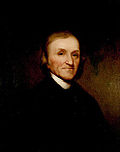 Joseph Priestley
 -
 Coat of Arms of Joseph Priestley
 -
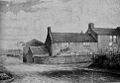 Priestley Birthplace
 -
 Priestley Grammar
 -
 Priestley Mary
 -
 A New Chart of History
 -
 Familiar Introduction to Electricity by Joseph Priestley, plate 7
 -
 Priestly-9
 -
 Priestley Leeds
 -
 Priestley Institutes
 -
 Priestley First Principles
 -
 Joseph Priestley's book Optics


