Hispaniola: Difference between revisions
CSV import |
CSV import |
||
| Line 33: | Line 33: | ||
[[Category:Dominican Republic]] | [[Category:Dominican Republic]] | ||
[[Category:Haiti]] | [[Category:Haiti]] | ||
<gallery> | |||
File:ISS027-E-17333_-_View_of_Dominican_Republic.jpg|Hispaniola | |||
File:Copia_de_Cacicazgos_de_la_Hispaniola.png|Hispaniola | |||
File:Hispaniola_Vinckeboons4.jpg|Hispaniola | |||
File:Santo_Domingo_-_Fortaleza_Ozama_0854.JPG|Hispaniola | |||
File:The_Devastations_of_Osorio.svg|Hispaniola | |||
File:Spanish_Caribbean_Islands_in_the_American_Viceroyalties_1600.png|Hispaniola | |||
File:Histoire_des_Colonies-Guillon-Ile_de_la_Tortue.jpg|Hispaniola | |||
File:Revolucion_Haitiana.png|Hispaniola | |||
File:Mapa_de_la_colonia_de_santo_domingo_durante_la_ocupación_francesa.png|Hispaniola | |||
File:Dominican_Republic_War_of_Independence.jpg|Hispaniola | |||
File:Fortaleza_San_Luis_-_Monumento_a_los_Héroes_de_la_Restauración.jpg|Hispaniola | |||
File:Hispaniola_lrg.jpg|Hispaniola | |||
</gallery> | |||
<gallery> | <gallery> | ||
File:ISS027-E-17333_-_View_of_Dominican_Republic.jpg|Hispaniola | File:ISS027-E-17333_-_View_of_Dominican_Republic.jpg|Hispaniola | ||
Revision as of 12:10, 18 February 2025
Hispaniola is an island located in the Caribbean region. It is the second largest island in the Caribbean and is shared by two countries: the Dominican Republic and Haiti. The island has a rich history and diverse culture, with influences from indigenous peoples, European colonizers, and African slaves.
History
Hispaniola was originally inhabited by indigenous peoples known as the Taino. In 1492, Christopher Columbus arrived on the island and claimed it for Spain, naming it La Isla Española, which was later anglicized to Hispaniola. The Spanish established the first European settlement in the Americas on the island, known as Santo Domingo, which served as the capital of the Spanish colonies in the Americas.
In the 17th century, the French established a colony on the western third of the island, which became known as Saint-Domingue. In the late 18th century, a slave revolt in Saint-Domingue led to the establishment of the independent nation of Haiti.
The eastern two-thirds of the island remained under Spanish control until the 19th century, when it became the independent Dominican Republic.
Geography
Hispaniola is located in the Caribbean Sea, between Cuba to the west and Puerto Rico to the east. The island is characterized by mountainous terrain, with the highest peak, Pico Duarte, located in the Dominican Republic. The island also has several large rivers, including the Artibonite River, which is the longest river in the Caribbean.
Culture
The culture of Hispaniola is a blend of indigenous, African, and European influences. The island is known for its music, particularly merengue and bachata from the Dominican Republic and kompa from Haiti. The island is also known for its cuisine, with dishes such as sancocho, mangu, and griot being popular.
See also
References
<references />
 | |
|---|---|
 |
 |
-
 Hispaniola
 -
 Hispaniola
 -
 Hispaniola
 -
 Hispaniola
 -
 Hispaniola
 -
 Hispaniola
 -
 Hispaniola
 -
 Hispaniola
 -
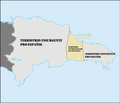 Hispaniola
 -
 Hispaniola
 -
 Hispaniola
 -
 Hispaniola


-
Hispaniola
-
Hispaniola
-
Hispaniola
-
Hispaniola
-
Hispaniola
-
Hispaniola
-
Hispaniola
-
Hispaniola
-
Hispaniola
-
Hispaniola
-
Hispaniola
-
Hispaniola
