Protein biosynthesis: Difference between revisions
CSV import |
CSV import |
||
| Line 24: | Line 24: | ||
{{Genetics-stub}} | {{Genetics-stub}} | ||
{{Medicine-stub}} | {{Medicine-stub}} | ||
<gallery> | |||
File:Summary_of_the_protein_biosynthesis_process.png|Protein_biosynthesis | |||
File:Nucleotide_structure_within_a_polynucleotide_chain.png|Protein_biosynthesis | |||
File:Directionality_of_DNA_molecule.png|Protein_biosynthesis | |||
File:Process_of_DNA_transcription.png|Protein_biosynthesis | |||
File:Post-transcriptional_modification_of_pre-mRNA.png|Protein_biosynthesis | |||
File:Translation_-_cycle.png|Protein_biosynthesis | |||
File:Protein_translation.gif|Protein_biosynthesis | |||
File:Protein_folding_figure.png|Protein_biosynthesis | |||
File:Post-translational_modification_by_cleavage.png|Protein_biosynthesis | |||
File:Post-translational_modification_through_the_addition_of_small_chemical_groups.png|Protein_biosynthesis | |||
File:Glycosylation_of_a_polypeptide.png|Protein_biosynthesis | |||
File:Formation_of_disulphide_covalent_bonds.png|Protein_biosynthesis | |||
</gallery> | |||
Revision as of 12:09, 18 February 2025
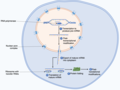
Protein biosynthesis is the process by which biological cells generate new proteins; it is balanced by the loss of cellular proteins via degradation or export. Understanding protein biosynthesis is crucial in the fields of molecular biology, genetics, and biochemistry. The process involves transcription, translation, and post-translational modifications.
Transcription
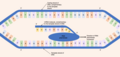
Transcription is the first step in protein biosynthesis. It occurs in the cell nucleus where DNA is used as a template to make messenger RNA (mRNA). This process is regulated by transcription factors that ensure the correct gene is copied.
Translation
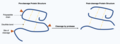
Translation is the process by which the mRNA is decoded by the ribosome to produce a specific amino acid chain, or polypeptide, that will later fold into an active protein. Translation occurs in the cytoplasm, where transfer RNA (tRNA) brings amino acids to the ribosome, matching them to the coded mRNA message.
Post-Translational Modifications
After translation, the new protein can undergo several modifications, known as post-translational modifications. These can include phosphorylation, glycosylation, and ubiquitination, which are critical for the function, location, and life span of the protein.
Regulation of Protein Biosynthesis
The regulation of protein biosynthesis is essential for cellular function and involves mechanisms that control the initiation of transcription and translation. These mechanisms ensure proteins are produced at the right time, in the right place, and in the right amounts.
Clinical Significance
Disruptions in protein biosynthesis can lead to diseases, including cancer, neurodegenerative diseases, and infectious diseases. Understanding these processes is crucial for developing therapeutic strategies.
.svg)
This article is a biochemistry stub. You can help WikiMD by expanding it!

This article is a molecular biology stub. You can help WikiMD by expanding it!


-
 Protein_biosynthesis
 -
 Protein_biosynthesis
 -
 Protein_biosynthesis
 -
 Protein_biosynthesis
 -
 Protein_biosynthesis
 -
 Protein_biosynthesis
 -
 Protein_biosynthesis
 -
 Protein_biosynthesis
 -
 Protein_biosynthesis
 -
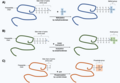 Protein_biosynthesis
 -
 Protein_biosynthesis
 -
 Protein_biosynthesis


