Paal–Knorr synthesis: Difference between revisions
CSV import |
CSV import |
||
| Line 28: | Line 28: | ||
{{Chemistry-stub}} | {{Chemistry-stub}} | ||
<gallery> | |||
File:Paal-Knorr_furan_synthesis.svg|Paal–Knorr_synthesis | |||
File:Paal-Knorr_Pyrrole_Synthesis.svg|Paal–Knorr_synthesis | |||
File:Paal-Knorr_thiophene.svg|Paal–Knorr_synthesis | |||
File:Paal-Knorr-Furan-Synthesis_mechanism.svg|Paal–Knorr_synthesis | |||
File:Paal-Knorr-pyrrole-synthesis_mechanism.svg|Paal–Knorr_synthesis | |||
File:Paal-Knorr-thiophen-synth_mechanism.svg|Paal–Knorr_synthesis | |||
File:Pyrrole_Ring.svg|Paal–Knorr_synthesis | |||
File:PK_epoxy_carbonyl.svg|Paal–Knorr_synthesis | |||
File:PKF_dione_yne.svg|Paal–Knorr_synthesis | |||
File:Knorr_pyrazole.png|Paal–Knorr_synthesis | |||
File:PK_roseophilin.png|Paal–Knorr_synthesis | |||
File:PK_furan_macrocycle.png|Paal–Knorr_synthesis | |||
</gallery> | |||
Revision as of 12:08, 18 February 2025
Paal–Knorr Synthesis is a widely used chemical reaction in organic chemistry for the synthesis of heterocycles. It was named after the German chemists Carl Paal and Ludwig Knorr, who first reported the method in 1884. The Paal–Knorr synthesis is particularly significant for its ability to efficiently generate pyrroles, furans, and thiophenes, which are core structures in many natural products, pharmaceuticals, and materials science applications.
Overview
The Paal–Knorr Synthesis involves the formation of five-membered heterocycles through the condensation of 1,4-dicarbonyl compounds with ammonia or its derivatives (for pyrroles), or with sulfur or phosphorus compounds (for thiophenes and furans, respectively). The choice of the starting material and the reaction conditions determines the specific heterocycle produced.
Mechanism
The mechanism of the Paal–Knorr Synthesis varies slightly depending on the heterocycle being synthesized but generally involves the nucleophilic attack of an amine, phosphorus, or sulfur nucleophile on a 1,4-dicarbonyl compound to form an intermediate. This intermediate then undergoes cyclization and dehydration to yield the heterocyclic product.
Applications
The Paal–Knorr Synthesis is utilized in the synthesis of various heterocyclic compounds that are important in medicinal chemistry, agrochemicals, and materials science. Pyrroles, furans, and thiophenes synthesized through this method are key structural motifs in numerous biologically active compounds and functional materials.
Variations
Several variations of the Paal–Knorr Synthesis have been developed to improve the yields, selectivity, and scope of the reaction. These include modifications of the reaction conditions, the use of different catalysts, and the development of asymmetric versions of the synthesis.
See Also
References
<references/>

-
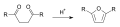 Paal–Knorr_synthesis
 -
 Paal–Knorr_synthesis
 -
 Paal–Knorr_synthesis
 -
 Paal–Knorr_synthesis
 -
 Paal–Knorr_synthesis
 -
 Paal–Knorr_synthesis
 -
 Paal–Knorr_synthesis
 -
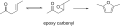 Paal–Knorr_synthesis
 -
 Paal–Knorr_synthesis
 -
 Paal–Knorr_synthesis
 -
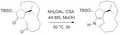 Paal–Knorr_synthesis
 -
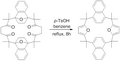 Paal–Knorr_synthesis


