Electronic waste: Difference between revisions
CSV import Tag: Manual revert |
CSV import Tags: mobile edit mobile web edit |
||
| Line 35: | Line 35: | ||
{{environment-stub}} | {{environment-stub}} | ||
<gallery> | |||
File:ewaste-pile.jpg|Electronic waste | |||
File:Brokencircuitboard2011.jpg|Electronic waste | |||
File:Electronic_waste_at_Agbogbloshie,_Ghana.jpg|Electronic waste | |||
File:Cracked_iPhone.jpg|Electronic waste | |||
File:Ewaste-crtkid.jpg|Electronic waste | |||
File:Batteries_comparison_4,5_D_C_AA_AAA_AAAA_A23_9V_CR2032_LR44_matchstick-1.jpeg|Electronic waste | |||
File:Agbogbloshie.JPG|Electronic waste | |||
File:Day_6_Warehouse_(25890985098)_(cropped).jpg|Electronic waste | |||
File:TV_and_Computer_Monitor_Recycling_Pen_-_geograph.org.uk_-_1025508.jpg|Electronic waste | |||
File:0ld_keyboards.JPG|Electronic waste | |||
File:Recycling_Computers.jpg|Electronic waste | |||
File:Day_7_-_8_Promoting_Recycling_in_Villages_(26034094638).jpg|Electronic waste | |||
</gallery> | |||
Latest revision as of 12:07, 18 February 2025
Electronic waste or e-waste refers to discarded electrical and electronic equipment (EEE) that is no longer wanted or has reached its end-of-life. This includes a wide range of products, from computers, mobile phones, and televisions to large household appliances such as refrigerators and air conditioners. The rapid advancement in technology, coupled with the increasing consumer demand for the latest gadgets, has significantly contributed to the growing volume of e-waste globally.
Sources of E-Waste[edit]
E-waste originates from various sources, including residential, commercial, and industrial sectors. The primary contributors are:
- Household Appliances: Including washing machines, refrigerators, microwaves, and air conditioners.
- IT and Telecommunications Equipment: Such as computers, laptops, printers, mobile phones, and televisions.
- Office Electronic Equipment: Including photocopiers, fax machines, and scanners.
Environmental and Health Impacts[edit]
The improper disposal and treatment of e-waste pose significant risks to the environment and human health. E-waste contains hazardous substances such as lead, mercury, cadmium, and polychlorinated biphenyls (PCBs), which can leach into the soil and water, contaminating food chains. When burned, e-waste releases toxic fumes into the atmosphere, contributing to air pollution and climate change.
E-Waste Management[edit]
Effective e-waste management involves the collection, transportation, processing, and recycling or disposal of electronic waste. Strategies include:
- Recycling: Recovering valuable materials such as copper, gold, and silver from e-waste for reuse.
- Refurbishing: Repairing and updating old electronics for resale or donation.
- Legislation: Implementing laws and regulations to ensure the proper disposal and treatment of e-waste.
Global Initiatives[edit]
Several global initiatives aim to address the e-waste challenge, including:
- The Basel Convention on the Control of Transboundary Movements of Hazardous Wastes and Their Disposal, which aims to reduce the movement of e-waste between countries, especially from developed to less developed nations.
- The Sustainable Development Goals (SDGs), particularly Goal 12, which focuses on ensuring sustainable consumption and production patterns, including the management of e-waste.
Challenges[edit]
Despite these efforts, managing e-waste remains a significant challenge due to:
- The rapid pace of technological advancement and the shortening lifespan of electronic devices.
- The illegal dumping and export of e-waste to less developed countries, where environmental regulations may be less stringent.
- The lack of awareness and infrastructure for proper e-waste disposal and recycling.
Conclusion[edit]
E-waste is a growing environmental and health concern that requires concerted efforts from governments, industries, and consumers to address. Through effective legislation, innovative recycling technologies, and global cooperation, it is possible to mitigate the impacts of e-waste and move towards a more sustainable future.
This article is a environment-related stub. You can help WikiMD by expanding it!
-
 Electronic waste
 -
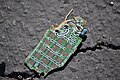 Electronic waste
 -
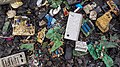 Electronic waste
 -
Electronic waste
-
Electronic waste
-
Electronic waste
-
Electronic waste
-
Electronic waste
-
Electronic waste
-
Electronic waste
-
Electronic waste
-
Electronic waste


_(cropped).jpg)


.jpg)