Fritter: Difference between revisions
CSV import Tags: mobile edit mobile web edit |
CSV import |
||
| Line 37: | Line 37: | ||
[[Category:Fried foods]] | [[Category:Fried foods]] | ||
{{food-stub}} | {{food-stub}} | ||
<gallery> | |||
File:Carrot_&_Chickpea_Fritters.jpg|Fritter | |||
File:Chilli_Bites_(Bhaji).jpg|Fritter | |||
File:Onion_Fritters_Peyaji.jpg|Fritter | |||
File:The_Bajji_maker.jpg|Fritter | |||
File:Uggani_bajji.jpg|Fritter | |||
File:Penjual_Gorengan.jpg|Fritter | |||
File:Tempe_and_tahu_goreng.JPG|Fritter | |||
File:Perkedel_Jagung_Jakarta.jpg|Fritter | |||
File:Pisang_goreng_in_a_basket.jpg|Fritter | |||
File:Malaysian_roadside_fritters.jpg|Fritter | |||
File:Myanmar_Fried_Snack.jpg|Fritter | |||
File:Kumbo.jpg|Fritter | |||
</gallery> | |||
Revision as of 12:07, 18 February 2025
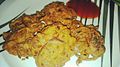
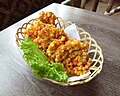
Fritter is a term used to describe a wide variety of fried foods, typically consisting of a portion of batter or breading which has been filled with bits of meat, seafood, fruit, vegetables, or other ingredients. Fritters are a popular culinary preparation across the world, with each cuisine having its own version based on local ingredients and traditional cooking methods. The concept of the fritter is quite versatile, ranging from savory to sweet, and from simple snacks to complex dishes.
History
The origin of fritters can be traced back to ancient times, with evidence suggesting that many cultures had some form of fried dough. The exact history is difficult to pinpoint due to the widespread nature of the dish and its variations. However, it is believed that the concept of frying batter to create a crispy exterior dates back to the Mediterranean and Middle Eastern regions, where oil was commonly used in cooking.
Ingredients and Preparation
The basic ingredients for fritters include flour, eggs, and milk or water, which are combined to form a batter. This batter can then be enhanced with additional ingredients such as sugar, salt, baking powder, and various spices and herbs to create different flavors. The primary filling ingredients can vary widely, including:
- Meat: such as chicken, pork, or beef
- Seafood: including shrimp, crab, or fish
- Vegetables: like corn, zucchini, or potatoes
- Fruit: such as apples, bananas, or pineapple
The preparation of fritters involves coating the chosen fillings in the batter, then frying them in oil until they are golden brown and crispy. The type of oil used for frying can vary, with vegetable oil, canola oil, and coconut oil being common choices.
Types of Fritters
There are numerous types of fritters found around the world, reflecting the diversity of culinary traditions. Some notable examples include:
- Apple Fritters: Sweet fritters made with chunks of apple and cinnamon.
- Corn Fritters: Savory fritters that incorporate whole kernels of corn.
- Bacalao Fritters: A popular dish in Spanish and Portuguese cuisine, made with salted cod.
- Pakora: A type of fritter originating from the Indian subcontinent, made with vegetables coated in a chickpea flour batter.
Nutritional Information
Fritters, being fried, are generally high in calories and fat. The nutritional content can vary significantly based on the ingredients used in the batter and filling, as well as the type of oil used for frying. For a healthier option, fritters can be baked instead of fried, although this will result in a different texture.
Cultural Significance
Fritters hold a special place in many cultures, often associated with festivals, celebrations, and comfort food. They are a versatile dish that can be adapted to suit different dietary preferences and ingredients availability, making them a popular choice in many parts of the world.
See Also

-
 Fritter
 -
 Fritter
 -
 Fritter
 -
 Fritter
 -
 Fritter
 -
 Fritter
 -
 Fritter
 -
 Fritter
 -
 Fritter
 -
Fritter
-
Fritter
-
Fritter

.jpg)


