Anterior cingulate cortex: Difference between revisions
CSV import Tags: mobile edit mobile web edit |
CSV import |
||
| Line 40: | Line 40: | ||
{{Neuroscience-stub}} | {{Neuroscience-stub}} | ||
{{Medicine-stub}} | {{Medicine-stub}} | ||
<gallery> | |||
File:Gray727_anterior_cingulate_cortex.png|Anterior cingulate cortex | |||
File:Gray727-Brodman.png|Brodmann areas in the anterior cingulate cortex | |||
File:MRI_anterior_cingulate.png|MRI of the anterior cingulate cortex | |||
File:Anterior_cingulate_gyrus_animation.gif|Animation of the anterior cingulate gyrus | |||
File:Medial_surface_of_cerebral_cortex_-_gyri.png|Medial surface of cerebral cortex - gyri | |||
File:Anterior_Cingulate_Cortex.png|Anterior cingulate cortex | |||
File:Caudal_Anterior_Cingulate_-_DK_ATLAS.png|Caudal anterior cingulate - DK ATLAS | |||
File:Rostral_Anterior_Cingulate_-_DK_ATLAS.png|Rostral anterior cingulate - DK ATLAS | |||
</gallery> | |||
Revision as of 12:01, 18 February 2025
Anterior Cingulate Cortex
The anterior cingulate cortex (ACC) is a part of the brain situated in the medial frontal lobe. It is involved in a wide array of cognitive and emotional functions, including decision-making, impulse control, emotion, and pain. The ACC has been the subject of extensive research, highlighting its complex role in the human brain.
Structure
The anterior cingulate cortex is part of the cingulate cortex, which is located immediately above the corpus callosum—a large bundle of nerve fibers connecting the two cerebral hemispheres. The ACC is divided into the dorsal and ventral regions, each associated with different functions. The dorsal ACC is primarily involved in cognitive processes, such as attention and decision-making, while the ventral ACC is linked to emotional regulation and response to pain.
Function
The ACC plays a crucial role in several cognitive and emotional processes:
- Cognitive Control and Decision Making: The ACC is involved in the modulation of cognitive control, which includes planning, problem-solving, and decision-making. It helps in assessing the outcomes of actions and making adjustments to behavior based on those assessments.
- Emotion: This region is also key in processing emotions. It helps in evaluating emotional information and regulating emotional responses.
- Pain Perception: The ACC is implicated in the subjective experience of pain. It not only processes the emotional aspect of pain but also plays a role in the anticipation of painful stimuli.
- Error Detection and Conflict Monitoring: The ACC is thought to be involved in detecting errors and monitoring conflicts in information processing, such as when a person is presented with incompatible information or choices.
Clinical Significance
Abnormalities in the anterior cingulate cortex have been linked to several neuropsychiatric disorders:
- Depression: Changes in the activity and structure of the ACC have been observed in individuals with depression, particularly in the regions associated with emotion.
- Anxiety Disorders: The ACC is involved in the pathophysiology of anxiety disorders, where it may contribute to heightened response to perceived threats.
- Schizophrenia: Schizophrenia has been associated with dysfunctions in the ACC, affecting cognitive control and decision-making processes.
- Chronic Pain: Alterations in the ACC's response to pain are observed in chronic pain conditions, affecting pain perception and emotional response to pain.
Research and Imaging
Advances in neuroimaging techniques, such as functional magnetic resonance imaging (fMRI) and positron emission tomography (PET), have facilitated detailed studies of the ACC's role in the brain. These studies have helped in understanding the functional connectivity of the ACC with other brain regions and its involvement in various cognitive and emotional processes.
Conclusion
The anterior cingulate cortex is a complex brain region with critical roles in cognitive functions, emotional regulation, and pain perception. Its involvement in various neuropsychiatric disorders highlights the importance of further research to understand its functions and potential therapeutic targets.

This article is a neuroscience stub. You can help WikiMD by expanding it!

-
 Anterior cingulate cortex
 -
 Brodmann areas in the anterior cingulate cortex
 -
 MRI of the anterior cingulate cortex
 -
 Animation of the anterior cingulate gyrus
 -
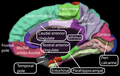 Medial surface of cerebral cortex - gyri
 -
 Anterior cingulate cortex
 -
 Caudal anterior cingulate - DK ATLAS
 -
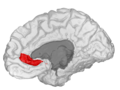 Rostral anterior cingulate - DK ATLAS


