Microbiological culture: Difference between revisions
CSV import |
CSV import |
||
| Line 34: | Line 34: | ||
{{Microbiology-stub}} | {{Microbiology-stub}} | ||
{{Science-stub}} | {{Science-stub}} | ||
<gallery> | |||
File:Microbial_cultures_fridge.JPG|Microbial cultures in a fridge | |||
File:Anthrax_culture.jpg|Anthrax culture | |||
File:Synechococcus_cyanobacteria-cultures.jpg|Synechococcus cyanobacteria cultures | |||
File:Diagnostic_algorithm_of_possible_bacterial_infection.png|Diagnostic algorithm of possible bacterial infection | |||
File:Multitarget_microbial_panel_for_MicroScan_WalkAway_system.jpg|Multitarget microbial panel for MicroScan WalkAway system | |||
File:BD_Phoenix_M50_automated_microbiology_system.jpg|BD Phoenix M50 automated microbiology system | |||
File:Работа_с_бактериологическим_анализатором_(cropped).jpg|Working with a bacteriological analyzer | |||
File:Stab_culture.png|Stab culture | |||
</gallery> | |||
Latest revision as of 11:50, 18 February 2025
Microbiological culture is a method used in microbiology to multiply microorganisms by letting them reproduce in predetermined culture media under controlled laboratory conditions. It is one of the primary diagnostic methods in microbiology used to isolate and identify the different types of microorganisms.
History[edit]
The concept of microbiological culture was first proposed by Robert Koch, a German physician and microbiologist. He developed the technique in the late 19th century as a way to isolate bacteria and study them in pure culture.
Types of Microbiological Culture[edit]
There are several types of microbiological cultures used for different purposes. These include:
- Pure culture: A culture in which only one type of microorganism is grown.
- Mixed culture: A culture that contains two or more types of microorganisms.
- Enrichment culture: A culture medium with specific nutrients added to favor the growth of a particular microorganism.
- Selective culture: A culture medium designed to suppress the growth of unwanted microorganisms and encourage the growth of desired ones.
Culture Media[edit]
The culture media used in microbiological culture are of several types, including:
- Agar plates: Solid culture media made from a gelatinous substance derived from seaweed.
- Broth cultures: Liquid culture media used for growing microorganisms like bacteria and fungi.
- Semi-solid media: Used for the detection of bacterial motility.
Applications[edit]
Microbiological culture has a wide range of applications in various fields such as medicine, pharmaceuticals, agriculture, and food industry. It is used for the isolation and identification of pathogens, production of antibiotics, and testing the effectiveness of antimicrobial agents.
See Also[edit]
 | |
|---|---|
 |
 |

-
 Microbial cultures in a fridge
 -
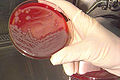 Anthrax culture
 -
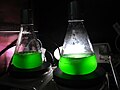 Synechococcus cyanobacteria cultures
 -
 Diagnostic algorithm of possible bacterial infection
 -
 Multitarget microbial panel for MicroScan WalkAway system
 -
 BD Phoenix M50 automated microbiology system
 -
 Working with a bacteriological analyzer
 -
 Stab culture


.jpg)

