South African cuisine: Difference between revisions
CSV import Tags: mobile edit mobile web edit |
CSV import |
||
| Line 28: | Line 28: | ||
{{stub}} | {{stub}} | ||
<gallery> | |||
File:The_Potjie_is_ready.JPG|South African cuisine | |||
File:LocationSouthAfrica.svg|South African cuisine | |||
File:Meat_preparation.jpg|South African cuisine | |||
File:Biltong_and_Droëwors,_South_Africa.jpg|South African cuisine | |||
File:Wiki_Loves_Africa_Cook-off5.JPG|South African cuisine | |||
File:Bunny_Chow_Close_Up.JPG|South African cuisine | |||
File:Frisch_aufgebrühter_Rooibos.jpg|South African cuisine | |||
File:Nandos-Canal-Walk.jpg|South African cuisine | |||
File:Panarotti’s_Pizza_Pasta_Century_City_2014.JPG|South African cuisine | |||
File:Chicken_with_tomato_bredie_(12567481243).jpg|South African cuisine | |||
File:Cape_Town_-_Vegan_Lekker_Nuggy_Gatsby_in_restaurant_Lekker_Vegan.jpg|South African cuisine | |||
File:Boeber.jpg|South African cuisine | |||
</gallery> | |||
Latest revision as of 11:44, 18 February 2025
South African cuisine refers to the cooking styles, traditions, and recipes associated with South Africa. South African cuisine has been shaped by a long history of exploration, colonization, and immigration, resulting in a unique blend of flavors and techniques.
History[edit]
The history of South African cuisine is a story of cultural exchange and adaptation. The indigenous Khoisan people were the first known inhabitants of the region, and their diet consisted mainly of game meat and wild plants. With the arrival of the Bantu people from Central Africa, new crops such as maize, beans, and pumpkins were introduced.
The arrival of European settlers in the 17th century brought further changes to the South African culinary landscape. The Dutch, French, and British introduced their own cooking methods and ingredients, including bread, potatoes, and dairy products. The influence of these European cuisines can still be seen in traditional South African dishes such as biltong, boerewors, and potjiekos.
In the 19th and 20th centuries, the arrival of Indian and Malay laborers added yet another layer of complexity to South African cuisine. These immigrants brought with them a variety of spices and cooking techniques, which have since become integral to South African cooking.
Regional Variations[edit]
South African cuisine varies greatly from region to region. In the Western Cape, for example, the cuisine is heavily influenced by the cooking styles of the Cape Malay community, with dishes such as bobotie and biryani being popular. In contrast, the cuisine of the Eastern Cape is more traditional, with a focus on meat dishes and starchy sides.
Popular Dishes[edit]
Some of the most popular dishes in South African cuisine include biltong, a type of cured meat; boerewors, a spiced sausage; and potjiekos, a slow-cooked stew. Other popular dishes include bobotie, a spiced, baked mince dish topped with an egg-based topping, and biryani, a spicy rice dish.
See Also[edit]
 | |
|---|---|
 |
 |
-
 South African cuisine
 -
 South African cuisine
 -
 South African cuisine
 -
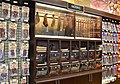 South African cuisine
 -
 South African cuisine
 -
 South African cuisine
 -
 South African cuisine
 -
 South African cuisine
 -
 South African cuisine
 -
 South African cuisine
 -
 South African cuisine
 -
 South African cuisine


.jpg)


