Genodermatosis: Difference between revisions
CSV import |
CSV import |
||
| Line 40: | Line 40: | ||
[[Category:Medical conditions]] | [[Category:Medical conditions]] | ||
{{stub}} | {{stub}} | ||
<gallery> | |||
File:Clouston%27s_hidrotic_ectodermal_dysplasia_patient_1.png|Clouston's hidrotic ectodermal dysplasia patient 1 | |||
File:Ichthyosis_(2).jpg|Ichthyosis | |||
File:Harlequin_ichthyosis.png|Harlequin ichthyosis | |||
File:HandsEBS.JPG|Hands with Epidermolysis Bullosa Simplex | |||
File:Dystrophic_type_of_epidermolysis_bullosa.jpg|Dystrophic type of epidermolysis bullosa | |||
File:Epidermolytic_hyperkeratosis_new_image.jpg|Epidermolytic hyperkeratosis | |||
File:Clouston's_hidrotic_ectodermal_dysplasia_patient_2.png|Clouston's hidrotic ectodermal dysplasia patient 2 | |||
</gallery> | |||
Revision as of 11:35, 18 February 2025
Genodermatosis is a category of genetic disorders that primarily affect the skin and are typically present from birth. These disorders are generally rare and can vary greatly in their presentation and severity. Some genodermatoses are isolated skin conditions, while others are part of larger syndromes that can affect multiple organ systems.
Types of Genodermatosis
There are many different types of genodermatoses, including:
- Epidermolysis bullosa: A group of genetic conditions that cause the skin to be very fragile and to blister easily.
- Ichthyosis: A group of skin disorders characterized by dry, scaly skin.
- Neurofibromatosis: A genetic disorder that causes tumors to form on nerve tissue.
- Tuberous sclerosis: A genetic disorder that causes noncancerous (benign) tumors to grow in many parts of the body.
- Albinism: A group of inherited disorders characterized by little or no production of the pigment melanin.
Symptoms
The symptoms of genodermatoses can vary greatly depending on the specific disorder. However, common symptoms can include:
- Skin abnormalities such as rashes, blisters, or changes in skin color
- Abnormal hair growth or loss
- Nail abnormalities
- Eye abnormalities
- Neurological symptoms, such as seizures or developmental delays, in disorders that affect other organ systems
Diagnosis
Diagnosis of genodermatoses typically involves a thorough medical history and physical examination, including a detailed examination of the skin. Genetic testing may also be performed to confirm the diagnosis and identify the specific genetic mutation causing the disorder.
Treatment
Treatment for genodermatoses is typically focused on managing symptoms and preventing complications. This can include:
- Topical treatments to manage skin symptoms
- Medications to manage other symptoms, such as seizures
- Regular monitoring for complications, such as skin cancer
- Genetic counseling for affected individuals and their families
See Also
 |
 |
-
 Clouston's hidrotic ectodermal dysplasia patient 1
 -
 Ichthyosis
 -
 Harlequin ichthyosis
 -
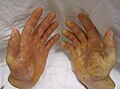 Hands with Epidermolysis Bullosa Simplex
 -
 Dystrophic type of epidermolysis bullosa
 -
 Epidermolytic hyperkeratosis
 -
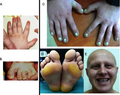 Clouston's hidrotic ectodermal dysplasia patient 2

.jpg)


