Idiopathic hypercalcinuria: Difference between revisions
CSV import |
CSV import |
||
| Line 28: | Line 28: | ||
{{stub}} | {{stub}} | ||
<gallery> | |||
File:UrinarySystemMale.jpg|Diagram of the male urinary system | |||
File:Urinary_System_(Female).png|Diagram of the female urinary system | |||
File:Kirkes'_handbook_of_physiology_(1907)_(14766693461).jpg|Illustration from Kirkes' handbook of physiology (1907) | |||
File:Kidney_stone_fragments.png|Kidney stone fragments | |||
File:Two_boxes_and_a_blister_pack_of_Co-Diovan_(Valsartan_and_hydrochlorothiazide),_Singapore_-_20150210.jpg|Co-Diovan medication (Valsartan and hydrochlorothiazide) | |||
File:Osteoporosis_Locations.png|Common locations of osteoporosis | |||
</gallery> | |||
Latest revision as of 11:31, 18 February 2025
Idiopathic Hypercalcinuria is a medical condition characterized by an excessive amount of calcium in the urine. This condition can lead to the formation of kidney stones and other complications. The cause of idiopathic hypercalcinuria is unknown, hence the term "idiopathic".
Symptoms[edit]
The symptoms of idiopathic hypercalcinuria can vary, but often include:
Causes[edit]
The exact cause of idiopathic hypercalcinuria is unknown. However, it is believed to be related to an overproduction of calcium by the body or an inability of the kidneys to reabsorb calcium.
Diagnosis[edit]
Diagnosis of idiopathic hypercalcinuria is typically made through a urine test to measure the amount of calcium in the urine. Other tests may include a blood test to check for high levels of calcium in the blood and a kidney ultrasound to look for kidney stones.
Treatment[edit]
Treatment for idiopathic hypercalcinuria typically involves dietary changes to reduce calcium intake. Medications may also be prescribed to help reduce the amount of calcium in the urine.
See Also[edit]
 | |
|---|---|
 |
 |
-
 Diagram of the male urinary system
 -
 Diagram of the female urinary system
 -
 Illustration from Kirkes' handbook of physiology (1907)
 -
 Kidney stone fragments
 -
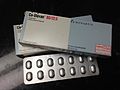 Co-Diovan medication (Valsartan and hydrochlorothiazide)
 -
 Common locations of osteoporosis

.png)
_(14766693461).jpg)

,_Singapore_-_20150210.jpg)

