Conversation theory: Difference between revisions
CSV import Tags: mobile edit mobile web edit |
CSV import |
||
| Line 34: | Line 34: | ||
{{Education-stub}} | {{Education-stub}} | ||
{{Comp-sci-stub}} | {{Comp-sci-stub}} | ||
<gallery> | |||
File:Derivation1.png|Conversation_theory | |||
File:Entailment_mesh.png|Conversation_theory | |||
File:Entailment_mesh2.png|Conversation_theory | |||
File:Analogy2.png|Conversation_theory | |||
File:Deriv.png|Conversation_theory | |||
File:Cycl.png|Conversation_theory | |||
File:Disjunctive.png|Conversation_theory | |||
File:Analogy.png|Conversation_theory | |||
</gallery> | |||
Latest revision as of 11:24, 18 February 2025
Conversation Theory developed by British cybernetician Gordon Pask in the 1970s, is a theoretical framework that focuses on the importance of conversation in learning and understanding. It posits that learning occurs through conversations where knowledge is co-constructed between participants. This theory is applicable in various fields including education, psychology, and computer science, particularly in the development of Artificial Intelligence and Human-Computer Interaction.
Overview[edit]
Conversation Theory asserts that learning is a process of conversation that involves the exchange of knowledge and ideas between individuals. It emphasizes the role of dialogue in the co-construction of understanding, where participants negotiate and share meanings to achieve mutual understanding. The theory is grounded in cybernetics, the study of systems and control processes in machines and living things, and it applies these principles to human communication and learning processes.
Key Concepts[edit]
Several key concepts underpin Conversation Theory:
- Dialogical Learning: Learning as a process of dialogue where knowledge is constructed through interaction.
- Conceptual Structures: The internal representations of knowledge that individuals use to understand and interact with the world.
- Agreement and Understanding: The goal of conversation is to reach mutual understanding and agreement on the topic of discussion.
- Feedback Loops: Conversations involve continuous feedback, allowing participants to adjust their contributions based on the responses of others.
Applications[edit]
Conversation Theory has been applied in various domains:
- In Education, it informs the design of collaborative learning environments and pedagogical strategies that emphasize dialogue and interaction.
- In Computer Science, it influences the development of intelligent tutoring systems and conversational agents that can engage in meaningful dialogues with users.
- In Organizational Development, it offers insights into how conversations can facilitate knowledge sharing and innovation within teams and organizations.
Challenges and Criticisms[edit]
While Conversation Theory provides a valuable framework for understanding the role of conversation in learning, it faces several challenges:
- The complexity of modeling conversational dynamics and conceptual structures in computational systems.
- The need for more empirical research to validate the theory's principles and applications in diverse contexts.
- Criticisms regarding the theory's applicability to non-dialogical learning processes and its emphasis on verbal communication.
Conclusion[edit]
Conversation Theory offers a comprehensive framework for understanding the dynamics of learning and knowledge construction through conversation. Despite its challenges, it continues to influence research and practice in education, computer science, and beyond, highlighting the fundamental role of dialogue in human learning and interaction.

This article is a philosophy-related stub. You can help WikiMD by expanding it!


This article is a computer science stub. You can help WikiMD by expanding it!
-
 Conversation_theory
 -
 Conversation_theory
 -
 Conversation_theory
 -
 Conversation_theory
 -
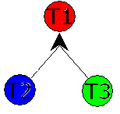 Conversation_theory
 -
 Conversation_theory
 -
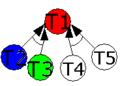 Conversation_theory
 -
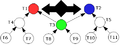 Conversation_theory


