Lontong: Difference between revisions
CSV import Tags: mobile edit mobile web edit |
CSV import |
||
| Line 24: | Line 24: | ||
[[Category:Street food]] | [[Category:Street food]] | ||
{{food-stub}} | {{food-stub}} | ||
<gallery> | |||
File:lontong.jpg|Lontong | |||
File:Sate_ayam_lontong_asongan.JPG|Sate ayam lontong asongan | |||
File:Lontong_perforated_plastic_packets_in_NL.jpg|Lontong perforated plastic packets | |||
File:Wrapped_lontong.jpg|Wrapped lontong | |||
File:Lontong_sayur_without_spoon.JPG|Lontong sayur | |||
File:Lontong_Cap_Gomeh.jpg|Lontong Cap Gomeh | |||
File:Lontong_kupang.jpg|Lontong kupang | |||
File:Lontong_pical_3.jpg|Lontong pical | |||
File:Arem-arem.JPG|Arem-arem | |||
</gallery> | |||
Latest revision as of 11:23, 18 February 2025
Lontong is a traditional Indonesian dish made of compressed rice that is then cooked in a banana leaf. The dish is commonly found in Indonesia, Malaysia, Singapore, and Brunei. It is considered a staple food in these regions and is often served at festive occasions and traditional ceremonies.
Preparation[edit]
The preparation of Lontong involves the compression of rice into a cylinder shape, which is then wrapped in a banana leaf. The wrapped rice is boiled until it becomes firm and the rice grains stick together. The banana leaf imparts a unique flavor to the rice. After cooking, the rice cake is cut into small pieces before serving.
Serving[edit]
Lontong is typically served as an accompaniment to other dishes. It is commonly served with rendang, a spicy meat dish, or sayur lodeh, a vegetable stew in coconut milk. It is also a key component of certain dishes like ketupat, gado-gado, and satay.
Variations[edit]
There are several regional variations of Lontong. In Java, it is often served with a spicy peanut sauce. In Sumatra, it is commonly served with a spicy beef stew. In Bali, it is often served with a variety of local dishes.
Cultural Significance[edit]
Lontong holds a significant place in the culinary traditions of Indonesia and its neighboring countries. It is often served during festive occasions such as Eid al-Fitr, the end of Ramadan, and during traditional ceremonies. It is also a popular street food and is widely available in food stalls and markets.
See Also[edit]

-
 Lontong
 -
 Sate ayam lontong asongan
 -
 Lontong perforated plastic packets
 -
 Wrapped lontong
 -
 Lontong sayur
 -
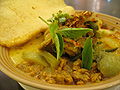 Lontong Cap Gomeh
 -
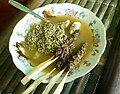 Lontong kupang
 -
 Lontong pical
 -
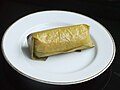 Arem-arem


