Kalmia latifolia: Difference between revisions
CSV import |
CSV import |
||
| Line 25: | Line 25: | ||
[[Category:Poisonous plants]] | [[Category:Poisonous plants]] | ||
{{Flora-stub}} | {{Flora-stub}} | ||
<gallery> | |||
File:Mountain_Laurel_Kalmia_latifolia_'Olympic_Wedding'_Leaves_and_Buds_2575px.jpg|Kalmia latifolia | |||
File:Buberel_unknown_flower_12.jpg|Kalmia latifolia | |||
File:Kalmia_latifolia_species.jpg|Kalmia latifolia | |||
File:Mountain_Loral_Flowers.jpg|Kalmia latifolia | |||
File:Mountain_Laurel_Kalmia_latifolia_'Olympic_Wedding'_Young_Old_Flowers_3264px.jpg|Kalmia latifolia | |||
File:Bee_on_a_mountain_laurel_on_Occoneechee_Mountain.jpg|Kalmia latifolia | |||
File:Mountain_Laurel_Fruiting_body.png|Kalmia latifolia | |||
File:Kalmia_latifolia_Clementine_Churchill.jpg|Kalmia latifolia | |||
File:Kalmia_latifolia_Little_Linda_0zz.jpg|Kalmia latifolia | |||
File:Kalmia_latifolia_'Minuet'_kz01.jpg|Kalmia latifolia | |||
File:Kalmia_latifolia_'Olympic_Fire'_6471.jpg|Kalmia latifolia | |||
File:Kalmia_latifolia_Pinwheel_1zz.jpg|Kalmia latifolia | |||
</gallery> | |||
Latest revision as of 11:02, 18 February 2025
Kalmia latifolia, commonly known as Mountain Laurel, is a species of flowering plant in the family Ericaceae, native to the eastern United States. Its range stretches from southern Maine south to northern Florida, and west to Indiana and Louisiana.
Description[edit]
Kalmia latifolia is an evergreen shrub growing to 3–9 m tall. The leaves are 3–12 cm long and 1–4 cm wide. Its flowers are round, ranging from light pink to white, and occur in clusters. The plant blooms in May and June. Each flower has five sepals and five petals.
Habitat and distribution[edit]
Kalmia latifolia is found in a variety of habitats, including forests, pastures, and mountains, at altitudes of up to 1,200 m. It prefers acidic, well-drained soils. It is often found in association with other members of the Ericaceae family, such as Rhododendron and Azalea.
Uses[edit]
The wood of Kalmia latifolia is heavy and strong but brittle. It has been used for making utensils, tools, and in the past, for making small boats. The plant is also used in horticulture for its attractive flowers and as a ground cover in acidic soils.
Toxicity[edit]
All parts of the plant are toxic and can be fatal if ingested by humans and animals. The plant contains andromedotoxin, which can cause symptoms such as nausea, headache, slow pulse, decreased temperature, and in severe cases, can lead to coma or death.
Conservation[edit]
While Kalmia latifolia is not currently considered threatened, it is susceptible to a number of diseases and pests, including leaf spot and blight, and the Kalmia leaf miner.
See also[edit]

This flora-related article is a stub. You can help WikiMD by expanding it.
-
 Kalmia latifolia
 -
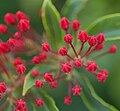 Kalmia latifolia
 -
 Kalmia latifolia
 -
 Kalmia latifolia
 -
 Kalmia latifolia
 -
 Kalmia latifolia
 -
 Kalmia latifolia
 -
 Kalmia latifolia
 -
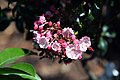 Kalmia latifolia
 -
 Kalmia latifolia
 -
 Kalmia latifolia
 -
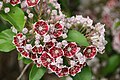 Kalmia latifolia


