Gingerbread man: Difference between revisions
CSV import |
CSV import |
||
| Line 28: | Line 28: | ||
[[Category:Ginger]] | [[Category:Ginger]] | ||
{{Food-stub}} | {{Food-stub}} | ||
<gallery> | |||
File:Gingerbread_men.jpg|Gingerbread men | |||
File:Gingy_Cookie.jpg|Gingy Cookie | |||
File:Gingerbread_Cookies_on_Table.jpg|Gingerbread Cookies on Table | |||
File:Gingerbread_landscape.jpg|Gingerbread landscape | |||
File:Gingerbreadmen_salesman.jpg|Gingerbreadmen salesman | |||
</gallery> | |||
Latest revision as of 05:04, 18 February 2025
Ginger snap is a type of cookie that originated in the United Kingdom. It is known for its distinct ginger flavor and crisp texture, which is achieved through the use of molasses, sugar, and a variety of spices.
History[edit]
The ginger snap has a long history, with its origins tracing back to the Middle Ages. It was during this time that ginger was first introduced to Europe from the Middle East. The spice quickly became popular and was incorporated into many different types of baked goods, including the ginger snap.
Ingredients and Preparation[edit]
The primary ingredients in a ginger snap are flour, butter, sugar, molasses, and ginger. Other common ingredients include cinnamon, cloves, and nutmeg. The dough is typically rolled into small balls and then flattened with a fork before being baked. The high sugar content in the cookie causes it to snap, or break cleanly, when bitten into, hence the name "ginger snap".
Variations[edit]
There are many variations of the ginger snap cookie around the world. In the United States, ginger snaps are often softer and chewier than their British counterparts. In Sweden, a version of the ginger snap known as the pepparkakor is a traditional Christmas cookie.
Health Benefits[edit]
Ginger snaps are not only delicious, but they also have several health benefits. Ginger is known for its anti-inflammatory properties and can help with digestion. Additionally, the spices used in ginger snaps, such as cinnamon and cloves, have been shown to have antioxidant properties.
See Also[edit]

-
 Gingerbread men
 -
 Gingy Cookie
 -
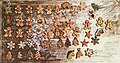 Gingerbread Cookies on Table
 -
 Gingerbread landscape
 -
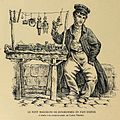 Gingerbreadmen salesman


