Maple sugar: Difference between revisions
CSV import |
CSV import Tags: mobile edit mobile web edit |
||
| Line 27: | Line 27: | ||
[[Category:Maple syrup]] | [[Category:Maple syrup]] | ||
{{food-stub}} | {{food-stub}} | ||
<gallery> | |||
File:Maple_sugar_cubes.jpg|Maple sugar cubes | |||
File:Golden_sugar_maple.jpg#file|Golden sugar maple | |||
File:Acer_saccharum.jpg|Acer saccharum | |||
File:Sugar_Makak_1925.jpg|Sugar Makak 1925 | |||
File:Maple_sugar_demonstration_1.jpg|Maple sugar demonstration | |||
</gallery> | |||
Latest revision as of 05:04, 18 February 2025
Maple Sugar is a type of sugar derived from the sap of the maple tree. It is a traditional sweetener in Canada and the northeastern United States, where these types of trees are native.
History[edit]
The practice of making maple sugar was adopted by European settlers from Native American tribes. The tribes had developed methods for harvesting the sap and boiling it down to create a sweetener long before the arrival of the Europeans.
Production[edit]
Maple sugar is made by boiling the sap of the sugar maple (Acer saccharum), black maple, or red maple trees during the late winter and early spring. This process, known as "sugaring off," involves boiling the sap until most of the water has been evaporated, leaving a thick, sweet syrup known as maple syrup. This syrup is then further boiled and stirred until it crystallizes into maple sugar.
Uses[edit]
Maple sugar is used in a variety of culinary applications. It can be used as a direct substitute for cane sugar in most recipes, and it is often used in baking, to sweeten beverages, or as a topping for pancakes and waffles. It is also used in the production of maple-flavored confections, such as maple candy and maple taffy.
Health Benefits[edit]
While maple sugar is still a form of sugar and should be consumed in moderation, it does contain some nutrients not found in other sweeteners. It is a source of manganese and zinc, and it has a lower glycemic index than cane sugar, meaning it may have less of an impact on blood sugar levels.
See Also[edit]

-
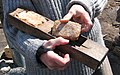 Maple sugar cubes
 -
 Golden sugar maple
 -
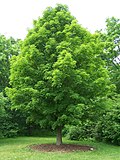 Acer saccharum
 -
 Sugar Makak 1925
 -
 Maple sugar demonstration


