Bullacta exarata: Difference between revisions
CSV import |
CSV import |
||
| Line 21: | Line 21: | ||
{{Gastropod-stub}} | {{Gastropod-stub}} | ||
{{food-stub}} | {{food-stub}} | ||
== Bullacta exarata == | |||
<gallery> | |||
File:Bullacta_exarata_shell.png|Bullacta exarata shell | |||
File:Bullacta_exarata_radula.png|Bullacta exarata radula | |||
File:Bullacta_exarata_penis-sack.png|Bullacta exarata penis sack | |||
File:Bullacta_exarata_penis.png|Bullacta exarata penis | |||
File:Bullacta_exarata_stylet.png|Bullacta exarata stylet | |||
</gallery> | |||
Revision as of 04:50, 18 February 2025
Bullacta exarata, also known as the Korean mud snail, is a species of gastropod belonging to the family Philinidae. This species is native to the coastal areas of East Asia, particularly in China, Japan, and Korea. It is a significant part of the marine biodiversity in these regions and plays a crucial role in the local ecosystem.
Description
Bullacta exarata is a small, marine snail that typically measures between 15 to 30 millimeters in length. It has a soft, rounded shell that is usually light brown or beige in color. The snail's body is characterized by a large foot and a small head with tentacles.
Habitat
The Bullacta exarata is commonly found in muddy or sandy substrates in the intertidal zones of East Asia's coastal areas. It prefers brackish waters and is often found in estuaries and tidal flats.
Diet
Bullacta exarata is a detritivore, feeding primarily on organic matter found in the sediment. It uses its radula, a specialized feeding organ, to scrape and ingest detritus from the substrate.
Economic Importance
In addition to its ecological role, Bullacta exarata is also of economic importance in East Asia. It is harvested for human consumption and is a popular ingredient in various traditional dishes. In China, it is often used in a dish called Baihe, a type of clam soup.
Conservation
While Bullacta exarata is not currently listed as an endangered species, it is vulnerable to habitat loss due to coastal development and pollution. Efforts are being made to monitor its population and protect its habitat to ensure its survival.
.png)

Bullacta exarata
-
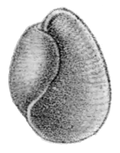 Bullacta exarata shell
 -
 Bullacta exarata radula
 -
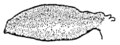 Bullacta exarata penis sack
 -
 Bullacta exarata penis
 -
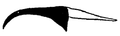 Bullacta exarata stylet


