Philippine asado: Difference between revisions
CSV import |
CSV import |
||
| Line 29: | Line 29: | ||
{{Philippines-cuisine-stub}} | {{Philippines-cuisine-stub}} | ||
{{food-stub}} | {{food-stub}} | ||
<gallery> | |||
File:7520Santa_Rita_Pampanga_Duman_Festival_31.jpg|Philippine asado | |||
File:4336Cuisine_and_foods_of_Baliuag,_Bulacan_11.jpg|Philippine asado | |||
File:Pork_Asadong_Matua2.jpg|Philippine asado | |||
File:Asado_roll_(baked_siopao)_from_the_Philippines_03.jpg|Philippine asado | |||
</gallery> | |||
Latest revision as of 04:35, 18 February 2025
Philippine asado is a culinary dish that is popular in the Philippines. It is a variant of the Spanish dish asado, which has been adapted to suit the tastes and ingredients available in the Philippines.
History[edit]
The term "asado" originally comes from the Spanish word for "roast" or "barbecue". The dish was introduced to the Philippines during the Spanish colonial period, which lasted from 1521 to 1898. Over time, the Filipino people adapted the dish to their own tastes and available ingredients, creating a unique version of asado that is distinctly Filipino.
Ingredients and Preparation[edit]
Philippine asado is typically made with pork, although chicken can also be used. The meat is marinated in a mixture of soy sauce, brown sugar, garlic, bay leaves, and peppercorns. After marinating, the meat is then braised until it becomes tender. The sauce is made from the marinade, which is simmered until it thickens. The dish is often served with rice and can be garnished with green onions.
Variations[edit]
There are several regional variations of Philippine asado. In the Visayas region, for example, the dish is often made with a sweet and tangy sauce, while in the Mindanao region, it is typically made with a spicy sauce. Some versions of the dish also include additional ingredients such as pineapple, tomatoes, or bell peppers.
Cultural Significance[edit]
Philippine asado is a popular dish for special occasions and family gatherings. It is often served during fiestas, birthdays, and other celebrations. The dish is also commonly found in Filipino carinderias (local eateries) and is a staple in Filipino cuisine.
See Also[edit]
_-_grilled_saba_bananas_-_01.jpg)
This article is a Filipino cuisine–related stub. You can help WikiMD by expanding it!

-
 Philippine asado
 -
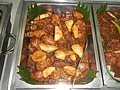 Philippine asado
 -
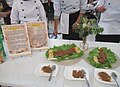 Philippine asado
 -
 Philippine asado


_from_the_Philippines_03.jpg)
