Fetal distress: Difference between revisions
CSV import |
CSV import |
||
| Line 51: | Line 51: | ||
{{stub}} | {{stub}} | ||
{{dictionary-stub1}} | {{dictionary-stub1}} | ||
<gallery> | |||
File:Cardiotocography_diagram.jpg|Cardiotocography diagram showing fetal heart rate and uterine contractions | |||
File:Southern_Partnership_Station_2016_Medical_Team_160906-N-CJ186-0025.jpg|Medical team during Southern Partnership Station 2016 | |||
</gallery> | |||
Latest revision as of 02:13, 18 February 2025
Fetal distress is a term used to describe a condition in which the fetus is not well in the uterus. This condition is usually detected during labor or delivery.
Causes[edit]
Fetal distress can be caused by a number of factors, including:
- Infection
- Premature rupture of membranes
- Placental abruption
- Umbilical cord problems
- Preeclampsia
- Maternal health problems
Symptoms[edit]
The symptoms of fetal distress can vary, but may include:
- Decreased fetal movement
- Abnormal fetal heart rate
- Meconium in the amniotic fluid
Diagnosis[edit]
Fetal distress is usually diagnosed through a combination of medical history, physical examination, and diagnostic tests. These may include:
Treatment[edit]
The treatment for fetal distress depends on the cause and severity of the condition. It may include:
Prognosis[edit]
The prognosis for fetal distress depends on the cause and severity of the condition, as well as the timing and effectiveness of treatment.
See also[edit]
- Fetal heart rate monitoring
- Intrauterine growth restriction
- Neonatal intensive care unit
- Obstetric ultrasonography
References[edit]
<references />
 | This medical article is a stub. You can help WikiMD by expanding the page. |
-
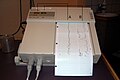 Cardiotocography diagram showing fetal heart rate and uterine contractions
 -
 Medical team during Southern Partnership Station 2016


