Pudding cloth: Difference between revisions
CSV import Tags: mobile edit mobile web edit |
CSV import |
||
| Line 26: | Line 26: | ||
{{food-stub}} | {{food-stub}} | ||
<gallery> | |||
File:Buittle_Tower_Kitchen._-_geograph.org.uk_-_951197.jpg|Buittle Tower Kitchen | |||
</gallery> | |||
Latest revision as of 21:56, 16 February 2025
Pudding cloth is a traditional kitchen tool used in the preparation of puddings, a staple in British cuisine and other culinary traditions. Made from a piece of cloth, typically linen or cotton, it is used to encase ingredients for boiled or steamed puddings, allowing for even cooking and easy removal from the cooking vessel.
History[edit]
The use of a pudding cloth dates back to at least the 17th century, evolving from earlier methods of pudding preparation that involved animal stomachs or intestines as casings. With the advent of the pudding cloth, cooks were able to more easily shape and cook their puddings, leading to the development of a wide variety of pudding recipes. The pudding cloth played a crucial role in the evolution of iconic dishes such as the Christmas pudding and suet pudding.
Preparation and Use[edit]
Before use, a pudding cloth is typically soaked in hot water and then floured on the inside. This process prevents the pudding from sticking to the cloth, making it easier to remove once cooked. The cloth is then laid out, and the pudding mixture is placed in the center. The edges of the cloth are gathered and tied securely with string, leaving enough room for the pudding to expand during cooking.
The prepared pudding is then placed into a pot of boiling water or a steamer and cooked for the required amount of time, which can vary from a couple of hours to several, depending on the recipe. Once cooked, the pudding is carefully removed from the cloth and served.
Modern Usage[edit]
While the use of pudding cloths has declined with the advent of modern kitchenware such as pudding basins and non-stick molds, they are still favored by traditionalists and those seeking to recreate authentic historical recipes. Pudding cloths can also be used for making other dishes, such as cheese, where they assist in the draining and shaping process.
Care and Maintenance[edit]
After use, a pudding cloth requires thorough cleaning to remove all food residues. It should be washed in hot, soapy water, rinsed well, and boiled to sterilize before being dried and stored. With proper care, a pudding cloth can be reused many times, making it an eco-friendly option for pudding preparation.
See Also[edit]

-
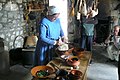 Buittle Tower Kitchen

