Albugo: Difference between revisions
CSV import |
CSV import |
||
| Line 1: | Line 1: | ||
Albugo | |||
'''Albugo''' is a genus of plant pathogenic [[oomycetes]] in the family [[Albuginaceae]]. Members of this genus are commonly known as white rusts, although they are not true rusts. They primarily infect plants in the [[Brassicaceae]] family, causing white blister-like pustules on the leaves, stems, and flowers. | |||
== | ==Description== | ||
Albugo species are obligate parasites, meaning they require a living host to complete their life cycle. The pathogen produces sporangia, which are asexual spores that disperse through wind or water to infect new host plants. Upon germination, the sporangia release zoospores that swim to the plant surface and penetrate the epidermis. | |||
The infection leads to the formation of white pustules, which are masses of sporangia that erupt through the plant's epidermis. These pustules are characteristic of white rust disease and can cause significant damage to the host plant by disrupting photosynthesis and nutrient transport. | |||
==Life Cycle== | ==Life Cycle== | ||
The life cycle of | The life cycle of Albugo involves both asexual and sexual reproduction. Asexual reproduction occurs through the production of sporangia, while sexual reproduction involves the formation of oospores. Oospores are thick-walled resting spores that can survive in the soil for extended periods, allowing the pathogen to persist between growing seasons. | ||
In favorable conditions, oospores germinate to produce sporangia, which then release zoospores to infect new plants. This cycle of infection and reproduction can lead to rapid disease spread under suitable environmental conditions. | |||
== | ==Host Range== | ||
Albugo primarily infects plants in the [[Brassicaceae]] family, including economically important crops such as [[cabbage]], [[broccoli]], and [[mustard]]. However, some species of Albugo can also infect plants in other families, such as [[Amaranthaceae]] and [[Convolvulaceae]]. | |||
==Control Measures== | ==Control Measures== | ||
Controlling Albugo infections involves a combination of cultural practices, resistant plant varieties, and chemical treatments. Crop rotation and removal of infected plant debris can reduce the presence of oospores in the soil. The use of resistant cultivars can also help minimize disease incidence. Fungicides may be applied to protect plants, but their effectiveness can vary depending on the timing and environmental conditions. | |||
==Related | ==Related Pages== | ||
* [[Oomycete]] | * [[Oomycete]] | ||
* [[Plant pathology]] | * [[Plant pathology]] | ||
| Line 35: | Line 27: | ||
==Gallery== | ==Gallery== | ||
<gallery> | <gallery> | ||
File:Albugo_candida.jpg|''Albugo candida'' on a plant | File:Albugo_candida.jpg|''Albugo candida'' on a plant leaf | ||
File:White_rust_symptoms.jpg|White rust symptoms on a | File:White_rust_symptoms.jpg|White rust symptoms on a plant | ||
</gallery> | </gallery> | ||
[[Category:Oomycetes]] | [[Category:Oomycetes]] | ||
[[Category:Plant pathogens and diseases]] | [[Category:Plant pathogens and diseases]] | ||
Revision as of 03:11, 12 February 2025
Albugo
Albugo is a genus of plant pathogenic oomycetes in the family Albuginaceae. Members of this genus are commonly known as white rusts, although they are not true rusts. They primarily infect plants in the Brassicaceae family, causing white blister-like pustules on the leaves, stems, and flowers.
Description
Albugo species are obligate parasites, meaning they require a living host to complete their life cycle. The pathogen produces sporangia, which are asexual spores that disperse through wind or water to infect new host plants. Upon germination, the sporangia release zoospores that swim to the plant surface and penetrate the epidermis.
The infection leads to the formation of white pustules, which are masses of sporangia that erupt through the plant's epidermis. These pustules are characteristic of white rust disease and can cause significant damage to the host plant by disrupting photosynthesis and nutrient transport.
Life Cycle
The life cycle of Albugo involves both asexual and sexual reproduction. Asexual reproduction occurs through the production of sporangia, while sexual reproduction involves the formation of oospores. Oospores are thick-walled resting spores that can survive in the soil for extended periods, allowing the pathogen to persist between growing seasons.
In favorable conditions, oospores germinate to produce sporangia, which then release zoospores to infect new plants. This cycle of infection and reproduction can lead to rapid disease spread under suitable environmental conditions.
Host Range
Albugo primarily infects plants in the Brassicaceae family, including economically important crops such as cabbage, broccoli, and mustard. However, some species of Albugo can also infect plants in other families, such as Amaranthaceae and Convolvulaceae.
Control Measures
Controlling Albugo infections involves a combination of cultural practices, resistant plant varieties, and chemical treatments. Crop rotation and removal of infected plant debris can reduce the presence of oospores in the soil. The use of resistant cultivars can also help minimize disease incidence. Fungicides may be applied to protect plants, but their effectiveness can vary depending on the timing and environmental conditions.
Related Pages
Gallery
-
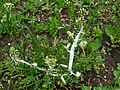 Albugo candida on a plant leaf
 -
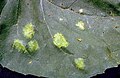 White rust symptoms on a plant


