Valley: Difference between revisions
CSV import Tags: mobile edit mobile web edit |
CSV import |
||
| Line 1: | Line 1: | ||
== Valley == | |||
A '''valley''' is a low area between hills or mountains | A '''valley''' is a low area between hills or mountains, often with a river running through it. Valleys are one of the most common landforms on Earth and can be formed through various geological processes, including erosion by rivers or glaciers. | ||
== Formation == | == Formation == | ||
Valleys are primarily formed by the erosive action of rivers and glaciers. [[River valleys]] are typically V-shaped, formed by the river cutting down into the earth over time. [[Glacial valleys]], on the other hand, are U-shaped, carved by the movement of glaciers. | |||
Valleys are | === River Valleys === | ||
River valleys are created by the continuous flow of water that erodes the land, creating a V-shaped profile. The [[Nile Valley]] in Egypt and the [[Indus Valley]] in Pakistan are examples of river valleys that have supported ancient civilizations. | |||
=== Glacial Valleys === | |||
Glacial valleys are formed by the movement of glaciers, which carve out a U-shaped profile. The [[Yosemite Valley]] in the United States is a famous example of a glacial valley. | |||
== Types of Valleys == | == Types of Valleys == | ||
Valleys can be classified into several types based on their formation and characteristics: | |||
* '''V-shaped valleys''': Formed by river erosion, characterized by steep sides and a narrow bottom. | |||
* '''U-shaped valleys''': Formed by glacial activity, with a broad, flat floor and steep walls. | |||
* ''' | * '''Flat-floored valleys''': Often formed by the deposition of sediments, these valleys have a wide, flat bottom. | ||
* ''' | |||
== Importance == | |||
Valleys are crucial for human habitation and agriculture. They often have fertile soil due to the deposition of sediments by rivers, making them ideal for farming. Many major cities and civilizations have developed in valleys due to the availability of water and fertile land. | |||
== Related Pages == | |||
* [[Canyon]] | * [[Canyon]] | ||
* [[Gorge]] | * [[Gorge]] | ||
* [[ | * [[Rift valley]] | ||
* [[ | * [[Floodplain]] | ||
== | == Gallery == | ||
<gallery> | |||
File:Salta-VallesCalchaquies-P3140151.JPG|Valley in Salta, Argentina | |||
File:Glacier_park1.jpg|Glacial valley in Glacier National Park | |||
File:Romsdalen.jpg|Romsdalen Valley, Norway | |||
File:Vale_dos_Frades.jpg|Vale dos Frades, Portugal | |||
File:Baemsagol_MS3812.JPG|Baemsagol Valley, South Korea | |||
File:Halikonjokilaakso.jpg|Halikonjokilaakso Valley, Finland | |||
File:Palakaria-and-Belchin-3.jpg|Palakaria Valley, Bulgaria | |||
File:Tal-y-llyn-valley-Dolgoch-01.jpg|Tal-y-llyn Valley, Wales | |||
File:Glacial_Valley_MtHoodWilderness.jpg|Glacial valley in Mt. Hood Wilderness, USA | |||
File:Pirin_ezera_Pano_Chairski_ezera.jpg|Pirin Valley, Bulgaria | |||
File:Paria_View_at_Bryce_Canyon_NP.jpg|Paria View, Bryce Canyon National Park | |||
File:Closeup_of_Bridalveil_Fall_seen_from_Tunnel_View_in_Yosemite_NP.JPG|Bridalveil Fall, Yosemite National Park | |||
File:Indus_Kohistan_Pakistan.jpg|Indus Valley, Pakistan | |||
File:DirkvdM_orosi.jpg|Orosi Valley, Costa Rica | |||
File:"Flowers_Blossom_at_Valley_of_Flowers_Chamoli,_India"_58.jpg|Valley of Flowers, India | |||
File:Harau_valley.jpg|Harau Valley, Indonesia | |||
File:Hells_Gate.jpg|Hell's Gate, Kenya | |||
</gallery> | |||
{{Geography-stub}} | |||
[[Category:Valleys]] | [[Category:Valleys]] | ||
Revision as of 01:07, 10 February 2025
Valley
A valley is a low area between hills or mountains, often with a river running through it. Valleys are one of the most common landforms on Earth and can be formed through various geological processes, including erosion by rivers or glaciers.
Formation
Valleys are primarily formed by the erosive action of rivers and glaciers. River valleys are typically V-shaped, formed by the river cutting down into the earth over time. Glacial valleys, on the other hand, are U-shaped, carved by the movement of glaciers.
River Valleys
River valleys are created by the continuous flow of water that erodes the land, creating a V-shaped profile. The Nile Valley in Egypt and the Indus Valley in Pakistan are examples of river valleys that have supported ancient civilizations.
Glacial Valleys
Glacial valleys are formed by the movement of glaciers, which carve out a U-shaped profile. The Yosemite Valley in the United States is a famous example of a glacial valley.
Types of Valleys
Valleys can be classified into several types based on their formation and characteristics:
- V-shaped valleys: Formed by river erosion, characterized by steep sides and a narrow bottom.
- U-shaped valleys: Formed by glacial activity, with a broad, flat floor and steep walls.
- Flat-floored valleys: Often formed by the deposition of sediments, these valleys have a wide, flat bottom.
Importance
Valleys are crucial for human habitation and agriculture. They often have fertile soil due to the deposition of sediments by rivers, making them ideal for farming. Many major cities and civilizations have developed in valleys due to the availability of water and fertile land.
Related Pages
Gallery
-
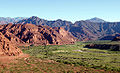 Valley in Salta, Argentina
 -
 Glacial valley in Glacier National Park
 -
 Romsdalen Valley, Norway
 -
 Vale dos Frades, Portugal
 -
 Baemsagol Valley, South Korea
 -
 Halikonjokilaakso Valley, Finland
 -
Palakaria Valley, Bulgaria
-
Tal-y-llyn Valley, Wales
-
Glacial valley in Mt. Hood Wilderness, USA
-
Pirin Valley, Bulgaria
-
Paria View, Bryce Canyon National Park
-
Bridalveil Fall, Yosemite National Park
-
Indus Valley, Pakistan
-
Orosi Valley, Costa Rica
-
Valley of Flowers, India
-
Harau Valley, Indonesia
-
Hell's Gate, Kenya


