National Institute for Medical Research: Difference between revisions
CSV import |
CSV import |
||
| Line 31: | Line 31: | ||
File:NIMR_building.JPG|National Institute for Medical Research building | File:NIMR_building.JPG|National Institute for Medical Research building | ||
File:Henry_Dale_nobel.jpg|Henry Dale, Nobel Prize winner | File:Henry_Dale_nobel.jpg|Henry Dale, Nobel Prize winner | ||
File:World_Influenza_Centre,_Mill_Hill.jpg|World Influenza Centre, Mill Hill | |||
File:NIMR_Lab_Technicians_in_Brown_and_White_Coats.jpg|NIMR Lab Technicians in Brown and White Coats | |||
File:National_Institute_for_Medical_Research_demolition_2018.jpeg|National Institute for Medical Research demolition 2018 | |||
</gallery> | |||
<gallery> | |||
File:MRC_National_Institute_for_Medical_Research_logo.gif|MRC National Institute for Medical Research logo | |||
File:NIMR_building.JPG|NIMR building | |||
File:Henry_Dale_nobel.jpg|Henry Dale, Nobel laureate | |||
File:World_Influenza_Centre,_Mill_Hill.jpg|World Influenza Centre, Mill Hill | File:World_Influenza_Centre,_Mill_Hill.jpg|World Influenza Centre, Mill Hill | ||
File:NIMR_Lab_Technicians_in_Brown_and_White_Coats.jpg|NIMR Lab Technicians in Brown and White Coats | File:NIMR_Lab_Technicians_in_Brown_and_White_Coats.jpg|NIMR Lab Technicians in Brown and White Coats | ||
File:National_Institute_for_Medical_Research_demolition_2018.jpeg|National Institute for Medical Research demolition 2018 | File:National_Institute_for_Medical_Research_demolition_2018.jpeg|National Institute for Medical Research demolition 2018 | ||
</gallery> | </gallery> | ||
Latest revision as of 11:30, 18 February 2025
National Institute for Medical Research (NIMR) is a leading biomedical research institution, dedicated to improving human health through the study of medicine, biology, and related fields. The institute plays a crucial role in advancing our understanding of diseases, developing new therapies and vaccines, and training the next generation of scientists and medical professionals.
History[edit]
The National Institute for Medical Research has a storied history, dating back to its establishment in the early 20th century. It was founded with the mission to tackle pressing health challenges of the time, which included infectious diseases such as tuberculosis and influenza. Over the years, NIMR has expanded its research focus to include a wide range of medical and biological disciplines, reflecting the evolving landscape of health threats and scientific opportunities.
Research Areas[edit]
NIMR's research encompasses a broad spectrum of medical and biological sciences. Key areas of investigation include:
- Genetics and genomics, focusing on the role of genes in health and disease.
- Immunology, including the study of the immune system and the development of vaccines.
- Infectious diseases, aiming to understand and combat pathogens like viruses, bacteria, and parasites.
- Neuroscience, exploring the complexities of the brain and nervous system.
- Cancer research, dedicated to uncovering the mechanisms of cancer and finding new treatments.
Facilities and Resources[edit]
The institute boasts state-of-the-art facilities and resources that enable cutting-edge research. These include advanced laboratories, bioinformatics and data analysis tools, and high-throughput screening capabilities. NIMR also maintains collaborations with hospitals and research institutions around the world, facilitating a multidisciplinary approach to medical research.
Education and Training[edit]
NIMR is committed to educating the next generation of scientists and healthcare professionals. The institute offers a range of educational programs, including PhD and postdoctoral training, workshops, and seminars. These programs are designed to provide participants with the knowledge and skills necessary for a successful career in biomedical research.
Impact[edit]
The research conducted at the National Institute for Medical Research has led to significant advancements in medical science. Discoveries made at NIMR have contributed to the development of new therapies, vaccines, and diagnostic tools, improving the lives of millions of people worldwide. The institute's work also informs public health policies and practices, helping to prevent disease and promote health globally.
Future Directions[edit]
Looking to the future, NIMR aims to continue its tradition of excellence in biomedical research. The institute is focused on addressing emerging health challenges, such as antimicrobial resistance, the global rise of non-communicable diseases, and the health impacts of climate change. Through innovation and collaboration, NIMR seeks to make lasting contributions to medical science and global health.
 | |
|---|---|
 |
 |
-
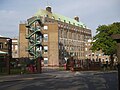 National Institute for Medical Research building
 -
 Henry Dale, Nobel Prize winner
 -
 World Influenza Centre, Mill Hill
 -
 NIMR Lab Technicians in Brown and White Coats
 -
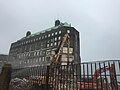 National Institute for Medical Research demolition 2018


-
MRC National Institute for Medical Research logo
-
NIMR building
-
Henry Dale, Nobel laureate
-
World Influenza Centre, Mill Hill
-
NIMR Lab Technicians in Brown and White Coats
-
National Institute for Medical Research demolition 2018

