Arthur Mourant: Difference between revisions
CSV import |
CSV import |
||
| Line 1: | Line 1: | ||
{{ | {{short description|Historical poison}} | ||
| | {{Use dmy dates|date=October 2023}} | ||
| | |||
}} | |||
''' | '''Aqua Tofana''' was a notorious poison that gained infamy in 17th-century Italy. It was reputedly used by women to murder their husbands and was associated with the professional poisoner [[Giulia Tofana]]. The poison was a clear, tasteless liquid, making it difficult to detect when mixed with food or drink. | ||
== | ==History== | ||
Aqua Tofana is believed to have originated in [[Naples]] and later spread to [[Rome]] and [[Palermo]]. It was named after Giulia Tofana, who was said to have distributed the poison to women seeking to escape abusive marriages. The poison became widely known after a series of investigations in the mid-17th century, which led to the arrest and execution of several women accused of using it. | |||
== | ==Composition== | ||
The exact composition of Aqua Tofana is not definitively known, but it is believed to have contained [[arsenic]], a common poison of the time. Some accounts suggest it also included [[lead]] and [[belladonna]], which would have enhanced its lethality. The mixture was designed to be slow-acting, allowing the victim to appear to die of natural causes. | |||
== | ==Method of Use== | ||
Aqua Tofana was typically administered in small doses over a period of time, allowing the symptoms to mimic those of a progressive illness. This method made it difficult for authorities to detect foul play, as the symptoms could easily be attributed to common diseases of the era. | |||
== | ==Cultural Impact== | ||
The fear of Aqua Tofana was widespread, and it became a symbol of the dangers of poison in the [[Baroque]] period. It was referenced in various works of literature and art, often as a cautionary tale about the perils of deceit and betrayal. | |||
== | ==Related pages== | ||
* [[Giulia Tofana]] | |||
* [[Arsenic poisoning]] | |||
* [[History of poisons]] | |||
* [[Baroque period]] | |||
== | ==Gallery== | ||
<gallery> | |||
File:Léo_Taxil-Mystères_de_la_Franc-Maçonnerie-gravure_85.jpg|An illustration depicting the secretive nature of poisons like Aqua Tofana. | |||
</gallery> | |||
[[Category:Poison]] | |||
[[Category:17th century in Italy]] | |||
[[Category:Italian folklore]] | |||
[[Category: | |||
[[Category: | |||
[[Category: | |||
Revision as of 18:28, 11 February 2025
Historical poison
Aqua Tofana was a notorious poison that gained infamy in 17th-century Italy. It was reputedly used by women to murder their husbands and was associated with the professional poisoner Giulia Tofana. The poison was a clear, tasteless liquid, making it difficult to detect when mixed with food or drink.
History
Aqua Tofana is believed to have originated in Naples and later spread to Rome and Palermo. It was named after Giulia Tofana, who was said to have distributed the poison to women seeking to escape abusive marriages. The poison became widely known after a series of investigations in the mid-17th century, which led to the arrest and execution of several women accused of using it.
Composition
The exact composition of Aqua Tofana is not definitively known, but it is believed to have contained arsenic, a common poison of the time. Some accounts suggest it also included lead and belladonna, which would have enhanced its lethality. The mixture was designed to be slow-acting, allowing the victim to appear to die of natural causes.
Method of Use
Aqua Tofana was typically administered in small doses over a period of time, allowing the symptoms to mimic those of a progressive illness. This method made it difficult for authorities to detect foul play, as the symptoms could easily be attributed to common diseases of the era.
Cultural Impact
The fear of Aqua Tofana was widespread, and it became a symbol of the dangers of poison in the Baroque period. It was referenced in various works of literature and art, often as a cautionary tale about the perils of deceit and betrayal.
Related pages
Gallery
-
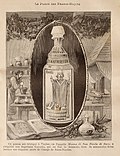 An illustration depicting the secretive nature of poisons like Aqua Tofana.

