Patellar tendon rupture: Difference between revisions
CSV import Tags: mobile edit mobile web edit |
CSV import |
||
| Line 66: | Line 66: | ||
{{medicine-stub}} | {{medicine-stub}} | ||
<gallery> | |||
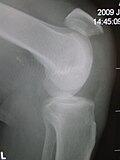
File:Patellar_tendon_rupture.JPG|Patellar tendon rupture | |||
</gallery> | |||
Revision as of 21:34, 20 February 2025

Patellar tendon rupture is a medical condition characterized by the complete or partial tear of the patellar tendon, which connects the patella (kneecap) to the tibia (shinbone). This injury is often associated with sudden, forceful movements or trauma and can significantly impair the function of the knee joint.
Anatomy
The patellar tendon is a crucial component of the extensor mechanism of the knee, which includes the quadriceps muscle, quadriceps tendon, patella, and patellar tendon. This mechanism is essential for activities such as walking, running, and jumping.
Causes
Patellar tendon ruptures can occur due to:
- Sudden, forceful contraction of the quadriceps muscle
- Direct trauma to the front of the knee
- Degenerative changes in the tendon, often related to chronic conditions such as tendinitis or patellar tendinopathy
- Systemic diseases like diabetes mellitus or rheumatoid arthritis that weaken the tendon
Symptoms
Common symptoms of a patellar tendon rupture include:
- Sudden, severe pain in the front of the knee
- Swelling and bruising
- Inability to straighten the knee or perform a straight-leg raise
- A palpable gap at the lower end of the patella
- Difficulty walking or bearing weight on the affected leg
Diagnosis
Diagnosis typically involves a combination of:
Treatment
Treatment options depend on the severity of the rupture:
- **Non-surgical treatment**: Partial tears may be treated with immobilization using a knee brace or cast, followed by physical therapy.
- **Surgical treatment**: Complete ruptures usually require surgical repair to reattach the tendon to the patella. Post-surgery rehabilitation is crucial for restoring knee function.
Rehabilitation
Rehabilitation involves:
- Gradual weight-bearing exercises
- Range of motion exercises
- Strengthening exercises for the quadriceps and surrounding muscles
- Functional training to return to daily activities and sports
Prognosis
The prognosis for patellar tendon rupture varies. With appropriate treatment and rehabilitation, many individuals can return to their previous level of activity. However, some may experience long-term complications such as decreased strength, reduced range of motion, or chronic pain.
Prevention
Preventive measures include:
- Proper warm-up and stretching before physical activities
- Strengthening exercises for the quadriceps and hamstrings
- Avoiding sudden increases in activity intensity
- Addressing any underlying medical conditions that may weaken the tendon
See also
References
<references group="" responsive="1"></references>
External links


-
 Patellar tendon rupture
