List of fentanyl analogues: Difference between revisions
CSV import |
CSV import Tags: mobile edit mobile web edit |
||
| Line 28: | Line 28: | ||
[[Category:Analgesics]] | [[Category:Analgesics]] | ||
[[Category:Synthetic opioids]] | [[Category:Synthetic opioids]] | ||
== List of fentanyl analogues == | |||
<gallery> | |||
File:Fentanyl_numbering.svg|Fentanyl numbering | |||
File:2-Fluoroacrylfentanyl_structure.png|2-Fluoroacrylfentanyl structure | |||
File:2-Fluorobutyrfentanyl_structure.png|2-Fluorobutyrfentanyl structure | |||
File:2-Fluoroisobutyrfentanyl_structure.png|2-Fluoroisobutyrfentanyl structure | |||
File:2-Methylacetylfentanyl_structure.png|2-Methylacetylfentanyl structure | |||
File:2-Methylmethoxyacetylfentanyl_structure.png|2-Methylmethoxyacetylfentanyl structure | |||
File:Phenaridine.svg|Phenaridine | |||
File:2,2'-Difluorofentanyl_structure.png|2,2'-Difluorofentanyl structure | |||
File:3-allylfentanyl.svg|3-Allylfentanyl | |||
File:Nfepp.png|Nfepp | |||
</gallery> | |||
Latest revision as of 20:54, 25 February 2025
Fentanyl analogues are a group of synthetic opioids that are derivatives of fentanyl, a powerful opioid analgesic. These substances have been developed to mimic the pharmacological effects of fentanyl, which is used medically for pain management and anesthesia. However, many fentanyl analogues have found their way into illicit drug markets, where they are often mixed with other substances, leading to a significant increase in opioid overdose deaths. Due to their high potency, even small variations in dosage of these analogues can lead to fatal outcomes, making them a major concern for public health and law enforcement agencies.
Overview[edit]
Fentanyl analogues vary in potency, ranging from less to much more potent than fentanyl itself. Their chemical structures are similar to fentanyl, but with slight modifications that can significantly alter their pharmacological effects. These analogues are often produced in clandestine laboratories and sold on the illicit drug market, frequently without the users' knowledge of the specific compound they are consuming.
List of Fentanyl Analogues[edit]
- Acetylfentanyl - A less potent analogue of fentanyl, but still significantly more potent than morphine.
- Butyrfentanyl - Has a potency slightly less than that of fentanyl.
- Carfentanil - One of the most potent fentanyl analogues known, it is estimated to be thousands of times more potent than morphine and is used legally only as a tranquilizer for large animals.
- Sufentanil - A fentanyl analogue used medically for pain relief and anesthesia, known for its high potency.
- Alfentanil - Another medically used analogue, less potent than fentanyl but more potent than morphine, used for anesthesia.
- Remifentanil - A very short-acting fentanyl analogue used in anesthesia.
- Ocfentanil - A potent synthetic opioid, similar in structure to fentanyl.
- Furanylfentanyl - An analogue that has been associated with numerous overdose deaths and has no legitimate medical use.
This list is incomplete; you can help WikiMD by expanding it.
Legal Status and Regulation[edit]
Due to the high potential for abuse and overdose, many fentanyl analogues are classified as controlled substances in various countries. The legal status of these substances can vary significantly, with some being completely banned for any use, while others may be controlled under specific conditions. Efforts to regulate these substances are complicated by the emergence of new analogues, challenging regulatory agencies to keep up with the rapidly evolving landscape of synthetic opioids.
Health Risks and Overdose[edit]
The health risks associated with fentanyl analogues are significant, primarily due to their high potency and the variability in strength of illicitly manufactured products. Overdose can lead to respiratory depression, coma, and death. The presence of fentanyl analogues in the illicit drug supply has contributed to a surge in opioid-related overdose deaths in recent years.
Treatment and Prevention[edit]
Treatment for overdose of fentanyl analogues typically involves the administration of naloxone, an opioid antagonist that can reverse the effects of opioid overdose. Prevention efforts focus on public education, improving access to treatment for substance use disorders, and strategies to reduce the supply of illicit opioids.
List of fentanyl analogues[edit]
-
 Fentanyl numbering
 -
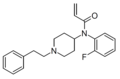 2-Fluoroacrylfentanyl structure
 -
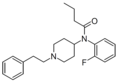 2-Fluorobutyrfentanyl structure
 -
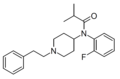 2-Fluoroisobutyrfentanyl structure
 -
 2-Methylacetylfentanyl structure
 -
 2-Methylmethoxyacetylfentanyl structure
 -
 Phenaridine
 -
 2,2'-Difluorofentanyl structure
 -
 3-Allylfentanyl
 -
 Nfepp
Nfepp


