Elias James Corey: Difference between revisions
CSV import Tags: mobile edit mobile web edit |
CSV import |
||
| Line 35: | Line 35: | ||
{{Chemist-stub}} | {{Chemist-stub}} | ||
<gallery> | |||
File:E.J.Coreyx240.jpg|Elias James Corey | |||
File:PCC_mechanism.png|PCC mechanism | |||
File:PCC_under_acidic_conditions2.png|PCC under acidic conditions | |||
File:PCC_rearrangement3.png|PCC rearrangement | |||
File:TBS_primary_deprotection4.png|TBS primary deprotection | |||
File:Primary_TIPS_deprotection5.png|Primary TIPS deprotection | |||
File:MEM_Zn_deprotection6.png|MEM Zn deprotection | |||
File:Dithiane_formation7.png|Dithiane formation | |||
File:1,2-dithiane_addition8.png|1,2-dithiane addition | |||
File:CBS_formation9.png|CBS formation | |||
File:CBS_mechanism10.png|CBS mechanism | |||
File:CBS_total_synthesis11.png|CBS total synthesis | |||
</gallery> | |||
Latest revision as of 11:03, 18 February 2025
Elias James Corey (born July 12, 1928) is an American organic chemist. In 1990, he was awarded the Nobel Prize in Chemistry for his development of the theory and methodology of organic synthesis, particularly for his work on the retrosynthetic analysis. Corey's contributions to the field of organic chemistry have had a profound impact on how pharmaceuticals, agrochemicals, and natural products are synthesized.
Early Life and Education[edit]
Elias James Corey was born in Methuen, Massachusetts, to Christian Lebanese immigrants. He developed an interest in chemistry at a young age, which was further nurtured by his high school chemistry teacher. Corey pursued his undergraduate studies at the Massachusetts Institute of Technology (MIT), where he received his B.S. in 1948. He then went on to earn his Ph.D. in chemistry from MIT in 1951, under the guidance of Professor John C. Sheehan.
Career and Research[edit]
After completing his Ph.D., Corey joined the faculty at the University of Illinois at Urbana–Champaign as an Assistant Professor. In 1959, he moved to Harvard University, where he has spent the majority of his academic career. Over the years, Corey has made significant contributions to the field of organic chemistry, with a particular focus on the development of new methodologies for organic synthesis.
One of Corey's most notable contributions is the development of retrosynthetic analysis, a strategy for planning the synthesis of complex organic molecules. This approach involves breaking down a complex molecule into simpler precursor structures until commercially available or easily synthesized compounds are identified. Retrosynthetic analysis has become a fundamental tool in the planning of organic syntheses, both in academia and in the pharmaceutical industry.
Corey has also developed numerous reagents and reactions that bear his name, including the Corey-Bakshi-Shibata (CBS) reagent, the Corey-Fuchs reaction, and the Corey-Kim oxidation. These tools have expanded the repertoire of reactions available to organic chemists and have been widely adopted in synthetic organic chemistry.
Awards and Honors[edit]
In addition to the Nobel Prize, Corey has received numerous awards and honors throughout his career, including the Priestley Medal, the highest honor awarded by the American Chemical Society, and the National Medal of Science. He is a member of the National Academy of Sciences and the American Academy of Arts and Sciences.
Legacy[edit]
Elias James Corey's work has had a lasting impact on the field of organic chemistry. His development of retrosynthetic analysis and his contributions to the synthesis of complex organic molecules have revolutionized the way chemists approach the synthesis of natural products and pharmaceuticals. Corey's methodologies and reagents continue to be used widely in research and industrial settings, underscoring his lasting legacy in the field.
Selected Publications[edit]
Corey has authored over 1,000 scientific publications, including several books on organic synthesis. Some of his most influential works include:
- The Logic of Chemical Synthesis
- Molecules and Medicine
- Enantioselective Chemical Synthesis
See Also[edit]
-
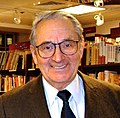 Elias James Corey
 -
 PCC mechanism
 -
 PCC under acidic conditions
 -
 PCC rearrangement
 -
 TBS primary deprotection
 -
 Primary TIPS deprotection
 -
 MEM Zn deprotection
 -
 Dithiane formation
 -
 1,2-dithiane addition
 -
 CBS formation
 -
 CBS mechanism
 -
CBS total synthesis


.jpg)
