Homing endonuclease: Difference between revisions
CSV import Tags: mobile edit mobile web edit |
CSV import |
||
| Line 33: | Line 33: | ||
{{Molecular-biology-stub}} | {{Molecular-biology-stub}} | ||
<gallery> | |||
File:I-CreI_dimer_DNA_4.png|Homing_endonuclease | |||
File:I-CreI_dimer_1.png|Homing_endonuclease | |||
File:I-CreI_dimer_DNA.png|Homing_endonuclease | |||
File:I-CreI_dimer_DNA_2.png|Homing_endonuclease | |||
</gallery> | |||
Latest revision as of 04:54, 18 February 2025
Homing endonucleases are a group of specialized enzymes with the unique ability to recognize and cleave specific DNA sequences, leading to the propagation of the endonuclease gene within a population of organisms. These enzymes are also known as "molecular scissors" due to their role in cutting DNA at specific sites. Homing endonucleases are found in all domains of life and are particularly notable for their long recognition sequences, which can range from 14 to 40 base pairs. This specificity allows for precise targeting within the genome, making them valuable tools in genetic engineering and molecular biology research.
Classification[edit]
Homing endonucleases are classified into four main families based on their structural motifs and mechanisms of action: LAGLIDADG, HNH, GIY-YIG, and His-Cys box. Each family is named after conserved amino acid sequences or structural features found within the enzymes.
- LAGLIDADG homing endonucleases are the most studied group and are characterized by the presence of one or two LAGLIDADG motifs. They are often found in mitochondrial DNA and chloroplast DNA.
- HNH homing endonucleases typically contain a conserved HNH motif and are known for their role in bacterial mobile genetic elements.
- GIY-YIG homing endonucleases are named after their conserved GIY-YIG sequence and are involved in various DNA repair and modification processes.
- His-Cys box homing endonucleases contain conserved histidine and cysteine residues and are less common than the other families.
Mechanism[edit]
The mechanism of action for homing endonucleases involves the recognition and binding to specific DNA sequences, followed by the cleavage of the DNA strand. This process often leads to the introduction of a double-strand break (DSB) in the DNA, which can then be repaired through homologous recombination or non-homologous end joining. During homologous recombination, the homing endonuclease gene can be copied and inserted into the cleavage site, leading to its propagation within the genome.
Applications[edit]
Due to their specificity and efficiency, homing endonucleases have been utilized in various applications in genetic engineering and molecular biology. Some of the key applications include:
- Genome Editing: Homing endonucleases have been used to create targeted modifications in the genomes of various organisms, including the development of genetically modified organisms (GMOs).
- Gene Therapy: Their ability to target specific DNA sequences makes homing endonucleases potential tools for correcting genetic mutations in gene therapy approaches.
- Synthetic Biology: Homing endonucleases are used in synthetic biology to construct novel genetic circuits and pathways.
Challenges and Future Directions[edit]
While homing endonucleases offer promising tools for genetic manipulation, there are challenges that need to be addressed, such as off-target effects and the delivery of these enzymes into target cells. Ongoing research is focused on improving the specificity and efficiency of homing endonucleases, as well as developing novel delivery methods for therapeutic applications.
See Also[edit]

This article is a molecular biology stub. You can help WikiMD by expanding it!
-
 Homing_endonuclease
 -
 Homing_endonuclease
 -
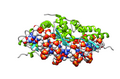 Homing_endonuclease
 -
 Homing_endonuclease


