DMeOB: Difference between revisions
CSV import |
CSV import Tags: mobile edit mobile web edit |
||
| Line 33: | Line 33: | ||
{{Chem-stub}} | {{Chem-stub}} | ||
{{medicine-stub}} | {{medicine-stub}} | ||
<gallery> | |||
File:DMeOB_structure.png|Structure of DMeOB | |||
File:DMeOB_3D_spacefill.png|3D space-filling model of DMeOB | |||
</gallery> | |||
Latest revision as of 02:07, 17 February 2025
DMeOB or Dimethoxybenzene is an organic compound with the formula (CH3O)2C6H4. This colorless liquid is a derivative of benzene, with two methoxy functional groups replacing two hydrogen atoms.
Structure and Synthesis[edit]
DMeOB is a symmetric molecule, with the two methoxy groups occupying opposite (para) positions on the benzene ring. The molecule is planar, as is typical for aromatic compounds.
The synthesis of DMeOB involves the Friedel-Crafts alkylation of benzene with dimethyl sulfate, a common methylating agent. This reaction is catalyzed by a strong acid, typically sulfuric acid or hydrochloric acid.
Properties and Uses[edit]
DMeOB is a colorless liquid that is slightly soluble in water but highly soluble in organic solvents. It has a pleasant, sweet odor and is used in the manufacture of perfumes and other fragrances.
In addition to its use in the fragrance industry, DMeOB is also used as a solvent in the chemical industry, particularly for reactions involving aromatic compounds. It is also used as a starting material in the synthesis of other organic compounds, including pharmaceuticals and dyes.
Safety and Health Effects[edit]
Like many organic solvents, DMeOB can be harmful if inhaled, ingested, or comes into contact with the skin. It can cause irritation to the eyes, skin, and respiratory tract. Chronic exposure can lead to more serious health effects, including damage to the liver and kidneys.
As with all chemicals, DMeOB should be handled with care, using appropriate personal protective equipment and in a well-ventilated area.
See Also[edit]


-
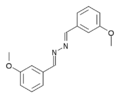 Structure of DMeOB
 -
 3D space-filling model of DMeOB


