Ebstein's anomaly: Difference between revisions
CSV import Tags: mobile edit mobile web edit |
CSV import |
||
| Line 24: | Line 24: | ||
{{medicine-stub}} | {{medicine-stub}} | ||
<gallery> | |||
File:Ebstein4.jpg|Ebstein's anomaly | |||
File:EbsteinAnomaly.svg|Diagram of Ebstein's anomaly | |||
File:ECGs_in_Ebstein's_anomoly_with_Mahaim_accessory_pathway.png|ECGs in Ebstein's anomaly with Mahaim accessory pathway | |||
File:Ebstein's_anomaly_ECG.png|ECG of Ebstein's anomaly | |||
</gallery> | |||
Revision as of 05:06, 18 February 2025
Ebstein's anomaly is a rare heart defect present at birth (congenital). It affects the tricuspid valve, one of the heart's four valves, which prevents blood from flowing back into the right upper heart chamber (atrium) from the right lower heart chamber (ventricle).
Overview
In Ebstein's anomaly, the tricuspid valve sits lower than normal in the right ventricle, causing a portion of the right ventricle to become part of the right atrium (atrialization of the right ventricle). This results in a smaller functional right ventricle and may lead to enlargement of the right atrium. The tricuspid valve's leaflets are also abnormally formed, leading to tricuspid regurgitation, where blood leaks back into the right atrium when the right ventricle contracts.
Symptoms
Symptoms of Ebstein's anomaly can vary greatly from person to person. Some individuals may remain symptom-free, while others may experience symptoms such as shortness of breath, fatigue, a heart murmur, cyanosis (a bluish discoloration of the skin due to low oxygen levels), arrhythmias (irregular heart rhythms), and heart failure.
Causes
The exact cause of Ebstein's anomaly is unknown. However, it is believed to occur early in the development of the fetus. Some studies suggest a possible link to the use of certain medications during pregnancy, such as lithium and benzodiazepines.
Diagnosis
Ebstein's anomaly is typically diagnosed through a combination of physical examination, medical history, and imaging tests. These may include an echocardiogram, electrocardiogram, cardiac MRI, and chest X-ray.
Treatment
Treatment for Ebstein's anomaly depends on the severity of the condition and the presence of symptoms. Options may include medications, cardiac catheterization, or heart surgery. In severe cases, a heart transplant may be necessary.
Prognosis
The prognosis for individuals with Ebstein's anomaly varies widely. Some individuals may live a normal life without symptoms, while others may require lifelong treatment and monitoring.

-
 Ebstein's anomaly
 -
Diagram of Ebstein's anomaly
-
 ECGs in Ebstein's anomaly with Mahaim accessory pathway
 -
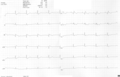 ECG of Ebstein's anomaly


