Fish allergy: Difference between revisions
CSV import Tags: mobile edit mobile web edit |
CSV import |
||
| Line 35: | Line 35: | ||
{{food-allergy-stub}} | {{food-allergy-stub}} | ||
<gallery> | |||
File:Signs_and_symptoms_of_anaphylaxis.png|Signs and symptoms of anaphylaxis | |||
File:Anisakis_in_O.keta.jpg|Anisakis in O. keta | |||
File:EMminor2010.JPG|EM minor 2010 | |||
File:Nomenclature_of_fish_parvalbumin_allergens.png|Nomenclature of fish parvalbumin allergens | |||
File:epipen.jpg|Epipen | |||
File:US_Allergen_Information_Example.jpg|US Allergen Information Example | |||
</gallery> | |||
Revision as of 11:06, 18 February 2025
Fish Allergy
A Fish Allergy is a type of food allergy that is triggered by the consumption of fish or fish-based products. It is a common form of allergy that affects both children and adults worldwide.
Symptoms
The symptoms of a fish allergy can vary from person to person. They can range from mild reactions such as hives, itching, and swelling, to severe reactions such as anaphylaxis. Other symptoms can include nausea, vomiting, diarrhea, abdominal pain, wheezing, and difficulty breathing.
Causes
Fish allergies are caused by an immune system reaction to proteins found in fish. The immune system mistakenly identifies these proteins as harmful and releases chemicals such as histamine to protect the body. This reaction causes the symptoms of an allergic reaction.
Diagnosis
Diagnosis of a fish allergy is typically made by an allergist or immunologist. The diagnosis process may involve a detailed medical history, a physical examination, skin prick tests, blood tests, and oral food challenges.
Treatment
There is currently no cure for fish allergies. The primary treatment is avoidance of fish and fish-based products. In cases of accidental ingestion, medications such as antihistamines and epinephrine may be used to manage symptoms.
Prevention
Prevention of fish allergies involves avoiding fish and fish-based products. This can be challenging due to the widespread use of fish in many foods. Reading food labels and asking about ingredients when eating out can help to avoid accidental exposure.
See Also
This article is a Food allergy-related stub. You can help WikiMD by expanding it!
-
 Signs and symptoms of anaphylaxis
 -
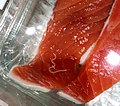 Anisakis in O. keta
 -
 EM minor 2010
 -
 Nomenclature of fish parvalbumin allergens
 -
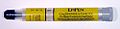 Epipen
 -
 US Allergen Information Example


