Museum: Difference between revisions
CSV import Tags: mobile edit mobile web edit |
CSV import |
||
| Line 46: | Line 46: | ||
{{museum-stub}} | {{museum-stub}} | ||
<gallery> | |||
File:Museo Chileno de Arte Precolombino - 2020 - 10.jpg|Museum | |||
File:Facade of the Egyptian Museum, Tahrir Square, Cairo, Egypt2.jpg|Museum | |||
File:Canada Science and Technology Museum.jpg|Museum | |||
File:HK TST 尖沙咀 Tsim Sha Tsui 梳士巴利道 Salisbury Road 花園 Garden Hong Kong Museum of Art HKMoA October 2020 SS2 02.jpg|Museum | |||
File:La maison des esclaves.jpg|Museum | |||
File:Diorama - Mangrove - Zoological Gallery - Indian Museum - Kolkata 2014-04-04 4386.JPG|Museum | |||
File:Gallery of 19th-Century Polish Art in the Sukiennice, 2022, 06.jpg|Museum | |||
File:Lower Paleolithic fossils from Darband Cave, Paleolithic hall, National Museum of Iran.jpg|Museum | |||
File:Segundo Editatón Soumaya Abierto 01.JPG|Museum | |||
File:Stallhof Residenz Dresden.jpg|Museum | |||
File:Ashmolean Museum (BM 1954,1103.1).jpg|Museum | |||
File:Réunion des Tuileries au Louvre 1852–1857 Getty Museum vol1 05 View of the Cour Napoléon toward the Tuileries.jpg|Museum | |||
</gallery> | |||
Latest revision as of 01:07, 20 February 2025
Museum
A Museum is an institution that conserves, collects, and displays a collection of artifacts and other objects of artistic, cultural, historical, or scientific importance. Many public museums make these items available for public viewing through exhibits that may be permanent or temporary. The largest museums are located in major cities throughout the world, while thousands of local museums exist in smaller cities, towns, and rural areas.
History[edit]
The word museum comes from the Ancient Greek Mouseion, which denotes a place or temple dedicated to the Muses (the patron divinities in Greek mythology of the arts). The museums of ancient times, such as the Museum of Alexandria, were private and only available to the public on a very limited basis.
Types of Museums[edit]
Museums vary in their nature and the types of collections they hold, ranging from large art museums such as the Louvre Museum in Paris to small history museums in towns and villages worldwide. Some museums focus on a specific subject, such as the American Museum of Natural History, which focuses on natural history collections and exhibits.
Art Museums[edit]
An Art museum or art gallery is a space for the exhibition of art, usually in the form of art objects from the visual arts, primarily paintings, illustrations, and sculptures. Collections may also include other types of works, such as decorative arts, textiles, costumes, and historical artifacts.
History Museums[edit]
History museums cover the knowledge of history and its relevance to the present and future. Some cover specific national history, some cover regional history, some may be about a specific historical event, and others may be about an aspect of cultural history.
Science Museums[edit]
Science museums and technology centers revolve around scientific achievements, and marvels and their history. They are designed to promote interest in science and are typically geared towards children and young adults.
Functions of Museums[edit]
Museums have various functions, including collecting, preserving, researching, and displaying objects of interest for the purposes of education or entertainment. They also serve as important research sites for scholars and researchers.
See Also[edit]
| Museums | ||||||||
|---|---|---|---|---|---|---|---|---|
This museum related article is a stub.
|
History of Museum[edit]
| Part of a series on |
| Science |
|---|
 |
| General |
| Branches |
| In society |

-
 Museum
 -
 Museum
 -
 Museum
 -
 Museum
 -
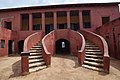 Museum
 -
 Museum
 -
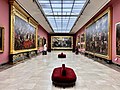 Museum
 -
 Museum
 -
 Museum
 -
 Museum
 -
 Museum
 -
 Museum


.jpg)

