French language: Difference between revisions
No edit summary |
CSV import |
||
| Line 34: | Line 34: | ||
{{Romance languages}} | {{Romance languages}} | ||
{{Indo-European languages}} | {{Indo-European languages}} | ||
<gallery> | |||
File:Top 6 Native French Speaking Countries.jpg|Top 6 Native French Speaking Countries | |||
File:Knowledge French EU map.svg|Knowledge of French in the EU | |||
File:NativevsOfficial.png|Native vs Official French | |||
File:Francophone Africa 2023.png|Francophone Africa 2023 | |||
File:French language distribution in Canada.png|French Language Distribution in Canada | |||
File:Arret.jpg|Arret | |||
File:French in the United States.png|French in the United States | |||
File:Bienvenue a Rechmaya.jpg|Bienvenue à Rechmaya | |||
File:CFP 500 recto.jpg|CFP 500 Recto | |||
File:Dialects of the french language.png|Dialects of the French Language | |||
</gallery> | |||
Latest revision as of 04:57, 3 March 2025
French language is a Romance language of the Indo-European family. It descended from the Vulgar Latin of the Roman Empire, as did all Romance languages. French evolved from Gallo-Romance, the spoken Latin in Gaul, and more specifically in Northern Gaul. Its closest relatives are the other langues d'oïl—languages historically spoken in northern France and in southern Belgium, which French (Francien) has largely supplanted.
History[edit]
French originated from the Latin spoken in the Roman Empire, as did languages such as Italian, Portuguese, Spanish, Romanian, Catalan and others. Its development was also influenced by the native Celtic languages of Roman Gaul and by the Germanic language of the post-Roman Frankish invaders.
Geographic distribution[edit]
French is an official language in 29 countries across multiple continents, most of which are members of the Organisation internationale de la Francophonie (OIF), the community of 84 countries which share the official use or teaching of French. French is also one of six official languages used in the United Nations.
Phonology[edit]
The phonology of French can be quite complex, with a large number of vowels and complex consonant clusters. French is known for its distinctive nasal vowels and three processes affecting word-final sounds: liaison, a certain type of sandhi, wherein latent final consonants are pronounced at the beginning of the following word; elision, wherein schwa is elided before a word beginning with a vowel or h muet; and vowel reduction.
Grammar[edit]
French grammar shares several notable features with most other Romance languages, including the loss of Latin declensions, the development of grammatical articles from Latin demonstratives, the loss of certain Latin tenses and the development of auxiliary tenses from verbs meaning 'to be' and 'to have'.
Vocabulary[edit]
The majority of French words derive from Vulgar Latin or were constructed from Latin or Greek roots. There are often pairs of words, one form being popular (noun) and the other one savant (adjective), both originating from Latin.
See also[edit]
- List of French language poets
- List of French expressions in English
- French phonology
- French orthography
- French literature
 |
| Part of a series on the |
| French language |
|---|
| History |
| Grammar |
| Orthography |
| Phonology |
| Romance languages (classification) | ||||||||||||||||||||||||||||||||||||||||||
|---|---|---|---|---|---|---|---|---|---|---|---|---|---|---|---|---|---|---|---|---|---|---|---|---|---|---|---|---|---|---|---|---|---|---|---|---|---|---|---|---|---|---|
* Italics indicate extinct languages
|
| Indo-European languages (list) | ||||||||||
|---|---|---|---|---|---|---|---|---|---|---|
Italics indicate extinct languages
|
-
 Top 6 Native French Speaking Countries
 -
 Knowledge of French in the EU
 -
 Native vs Official French
 -
 Francophone Africa 2023
 -
 French Language Distribution in Canada
 -
 Arret
Arret -
 French in the United States
 -
 Bienvenue à Rechmaya
 -
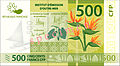 CFP 500 Recto
 -
 Dialects of the French Language


