Monastery: Difference between revisions
CSV import |
CSV import |
||
| Line 30: | Line 30: | ||
{{stub}} | {{stub}} | ||
<gallery> | |||
File:St_gall_plan.jpg|St gall plan | |||
File:Procession_monastique.jpg|Procession monastique | |||
File:Taktsang_Palphug_Monastery_aka_Paro_Taktsang_aka_Tiger's_Nest,_July_2016_13.jpg|Taktsang Palphug Monastery aka Paro Taktsang aka Tiger's Nest | |||
File:Mendicant_Monk_Sitting_on_Xindong_Street,_Taipei_20140103.jpg|Mendicant Monk Sitting on Xindong Street, Taipei | |||
File:Poustevník_v_jeskyni_-_Lochotínský_park_Plzeň.jpg|Poustevník v jeskyni - Lochotínský park Plzeň | |||
File:Monte_Cassino_Abbey.jpg|Monte Cassino Abbey | |||
File:Mont-Saint-Michel_vu_du_ciel.jpg|Mont-Saint-Michel vu du ciel | |||
File:Henrykow_former_Cistercian_abbey_2019_P05_aerial_view.jpg|Henrykow former Cistercian abbey aerial view | |||
File:595viki_Lubiąż._Foto_Barbara_Maliszewska.jpg|Lubiąż | |||
File:Krzeszow_03.jpg|Krzeszow | |||
File:Meteora_Monastery_-_panoramio_(1).jpg|Meteora Monastery | |||
File:Athos_13.jpg|Athos | |||
</gallery> | |||
Latest revision as of 21:33, 23 February 2025
Monastery is a building or complex of buildings comprising the domestic quarters and workplaces of monks or nuns, whether living in communities or alone (hermits). A monastery generally includes a place reserved for prayer which may be a chapel, church, or temple, and may also serve as an oratory.
Monasteries vary greatly in size, comprising a small dwelling accommodating only a hermit, or in the case of communities anything from a single building housing only one senior and two or three junior monks or nuns, to vast complexes and estates housing tens or hundreds. A monastery complex typically comprises a number of buildings which include a church, dormitory, cloister, refectory, library, balneary and infirmary. Depending on the location, the monastic order and the occupation of its inhabitants, the complex may also include a wide range of buildings that facilitate self-sufficiency and service to the community. These may include a hospice, a school, and a range of agricultural and manufacturing buildings such as a barn, a forge, or a brewery.
History[edit]
The concept of the monastery has its roots in the asceticism of the Ancient Near East, which was further developed in the Early Christian period. The first Christian monasteries were established in the 4th century by Saint Anthony the Great in the deserts of Egypt. These early monastic communities, known as Lavra, were composed of individual cells or caves where monks lived in isolation, coming together only for communal worship.
Types of Monasteries[edit]
There are several types of monasteries, which are classified based on various factors such as the gender of its inhabitants, the specific religious order, and the presence or absence of a vow of stability. Some of the most common types include:
- Cenobitic Monastery: This is the most common form of monastery, where monks or nuns live in a community under a common rule. They are often guided by an Abbot or Abbess.
- Eremitic Monastery: Also known as a hermitage, this type of monastery is inhabited by hermits who seek solitude and live in individual cells or caves.
- Double Monastery: This type of monastery houses both monks and nuns, who live separately but come together for communal prayer and meals.
- Royal Monastery: These are monasteries that are directly under the patronage of a king or queen, who often provide financial support and protection.
See Also[edit]
 | |
|---|---|
 |
 |
-
 St gall plan
 -
 Procession monastique
 -
 Taktsang Palphug Monastery aka Paro Taktsang aka Tiger's Nest
 -
 Mendicant Monk Sitting on Xindong Street, Taipei
 -
 Poustevník v jeskyni - Lochotínský park Plzeň
 -
 Monte Cassino Abbey
 -
 Mont-Saint-Michel vu du ciel
 -
 Henrykow former Cistercian abbey aerial view
 -
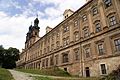 Lubiąż
 -
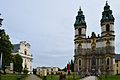 Krzeszow
 -
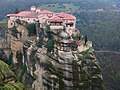 Meteora Monastery
 -
 Athos
Athos


.jpg)

