Electrical engineering: Difference between revisions
CSV import |
CSV import |
||
| Line 31: | Line 31: | ||
{{stub}} | {{stub}} | ||
<gallery> | |||
File:Umspannwerk-Pulverdingen_380kV-Trennschalter.jpg|Electrical engineering | |||
File:Faraday_Cochran_Pickersgill.jpg|Electrical engineering | |||
File:Guglielmo_Marconi.jpg|Electrical engineering | |||
File:Replica-of-first-transistor.jpg|Electrical engineering | |||
File:MOSFET_Structure.png|Electrical engineering | |||
File:Power_pole.jpg|Electrical engineering | |||
File:Erdfunkstelle_Raisting_2a.jpg|Electrical engineering | |||
File:Space_Shuttle_Columbia_launching.jpg|Electrical engineering | |||
File:Componentes.JPG|Electrical engineering | |||
File:80486dx2-large.jpg|Electrical engineering | |||
File:Bayer_pattern_on_sensor.svg|Electrical engineering | |||
File:F-18E_cockpit_m02006112600499.jpg|Electrical engineering | |||
</gallery> | |||
Latest revision as of 12:07, 18 February 2025
Electrical engineering is a field of engineering that generally deals with the study and application of electricity, electronics, and electromagnetism. This field first became an identifiable occupation in the latter half of the 19th century after commercialization of the electric telegraph, the telephone, and electric power distribution and use.
History[edit]
The field of electrical engineering was established in the 19th century, and it is considered one of the newest branches of engineering. The first electrical engineering degree program was started at the Massachusetts Institute of Technology (MIT) in the physics department under Professor Charles Cross.
Sub-disciplines[edit]
There are several sub-disciplines within the broad field of electrical engineering. These include power engineering, control engineering, electronics, microelectronics, signal processing, telecommunications, and instrumentation engineering.
Education and training[edit]
In order to become an electrical engineer, individuals must obtain a bachelor's degree in electrical engineering or a related field. Some electrical engineers also choose to pursue a master's degree or doctorate for advanced positions.
Professional organizations[edit]
There are several professional organizations for electrical engineers, including the Institute of Electrical and Electronics Engineers (IEEE) and the Institution of Engineering and Technology (IET).
See also[edit]
- Engineering
- Electronics
- Electromagnetism
- Institute of Electrical and Electronics Engineers
- Institution of Engineering and Technology
 | |
|---|---|
 |
 |
-
 Electrical engineering
 -
 Electrical engineering
 -
 Electrical engineering
 -
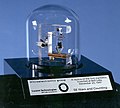 Electrical engineering
 -
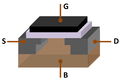 Electrical engineering
 -
 Electrical engineering
 -
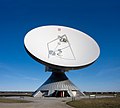 Electrical engineering
 -
Electrical engineering
-
Electrical engineering
-
Electrical engineering
-
Electrical engineering
-
Electrical engineering


