Ras el hanout: Difference between revisions
CSV import Tags: mobile edit mobile web edit |
CSV import |
||
| Line 32: | Line 32: | ||
[[Category:Spices]] | [[Category:Spices]] | ||
[[Category:Moroccan Cuisine]] | [[Category:Moroccan Cuisine]] | ||
<gallery> | |||
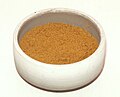
File:Ras.el.hanout.jpg|Ras el hanout | |||
</gallery> | |||
Latest revision as of 21:42, 20 February 2025
Ras el hanout is a popular spice blend from North Africa, particularly used in Moroccan cuisine. The name translates to "head of the shop" in Arabic, implying that it's the best (or top) mixture the spice merchant has to offer.
Ingredients[edit]
Ras el hanout's composition varies from shop to shop and family to family, but it typically includes over a dozen spices. Common ingredients include cardamom, cumin, cloves, cinnamon, nutmeg, mace, allspice, dry ginger, chili peppers, coriander seed, peppercorn, sweet and hot paprika, fenugreek, and turmeric. However, some recipes may include over 30 ingredients.
Usage[edit]
Ras el hanout is used in a variety of dishes. It can be rubbed on meat, stirred into rice or couscous, mixed into tagines, or even used in desserts for a unique flavor profile.
Preparation[edit]
To prepare Ras el hanout, each spice is individually ground and then mixed together. The blend is usually dry-roasted to enhance the flavor.
Variations[edit]
There are many variations of Ras el hanout, depending on the region and personal preference. Some versions may include rose petals or Spanish fly, while others may include lavender or saffron.
Health Benefits[edit]
Ras el hanout is not only flavorful but also has several health benefits. The spices in the blend have been linked to various health benefits, including anti-inflammatory properties, digestive aid, and potential cancer-fighting properties.
See Also[edit]
References[edit]
- The Food of Morocco by Paula Wolfert
- Cooking at the Kasbah: Recipes from My Moroccan Kitchen by Kitty Morse
- The New Book of Middle Eastern Food by Claudia Roden
External Links[edit]
-
 Ras el hanout

