Arctic roll: Difference between revisions
CSV import |
CSV import |
||
| Line 1: | Line 1: | ||
= | {{short description|A psychological disorder characterized by excessive fear or worry}} | ||
{{Use dmy dates|date=October 2023}} | |||
'''Anxiety disorder''' is a mental health condition characterized by feelings of worry, anxiety, or fear that are strong enough to interfere with one's daily activities. These feelings may cause physical symptoms, such as a fast heart rate and shakiness. Anxiety disorders are a group of mental disorders characterized by significant feelings of anxiety and fear. Anxiety is a worry about future events, and fear is a reaction to current events. These feelings may cause physical symptoms, such as a fast heart rate and shakiness. | |||
==Types of Anxiety Disorders== | |||
Anxiety disorders are classified into several types, including: | |||
* '''[[Generalized anxiety disorder]] (GAD)''': Characterized by chronic anxiety, exaggerated worry, and tension, even when there is little or nothing to provoke it. | |||
* '''[[Panic disorder]]''': Involves sudden and repeated attacks of intense fear that reach a peak within minutes (panic attacks). | |||
* '''[[Social anxiety disorder]]''': Also known as social phobia, involves overwhelming worry and self-consciousness about everyday social situations. | |||
* '''[[Specific phobias]]''': Intense fear of a specific object or situation, such as heights or flying. | |||
* '''[[Agoraphobia]]''': Fear of places or situations that might cause panic, helplessness, or embarrassment. | |||
* '''[[Separation anxiety disorder]]''': Excessive fear or anxiety about separation from home or an attachment figure. | |||
==Symptoms== | |||
Symptoms of anxiety disorders can vary depending on the type of disorder, but common symptoms include: | |||
* Feeling nervous, restless, or tense | |||
* Having a sense of impending danger, panic, or doom | |||
* Increased heart rate | |||
* Rapid breathing (hyperventilation) | |||
* Sweating | |||
* Trembling | |||
* Feeling weak or tired | |||
* Trouble concentrating or thinking about anything other than the present worry | |||
* Having trouble sleeping | |||
* Experiencing gastrointestinal (GI) problems | |||
* Having difficulty controlling worry | |||
* Having the urge to avoid things that trigger anxiety | |||
The | ==Causes== | ||
The causes of anxiety disorders are complex and may include: | |||
* '''Genetics''': Anxiety disorders can run in families, suggesting that a combination of genes and environmental stresses can produce the disorders. | |||
* '''Brain chemistry''': Anxiety disorders may be linked to faulty circuits in the brain that control fear and emotions. | |||
* '''Environmental factors''': Stressful or traumatic events can trigger anxiety disorders in people who are already prone to anxiety. | |||
* '''Medical factors''': Certain medical conditions or medications can cause symptoms of anxiety. | |||
== | ==Diagnosis== | ||
Diagnosis of anxiety disorders involves a comprehensive evaluation by a mental health professional. This may include: | |||
* A physical exam to rule out other health conditions | |||
* A psychological evaluation to discuss thoughts, feelings, and behavior patterns | |||
* Comparing symptoms to the criteria in the [[Diagnostic and Statistical Manual of Mental Disorders]] (DSM-5) | |||
== | ==Treatment== | ||
Treatment for anxiety disorders often includes a combination of therapy and medication. Common treatments include: | |||
* '''[[Cognitive behavioral therapy]] (CBT)''': A type of psychotherapy that helps patients understand the thoughts and feelings that influence behaviors. | |||
* '''Medications''': Such as antidepressants, benzodiazepines, and beta-blockers. | |||
* '''Lifestyle changes''': Including stress management techniques, regular exercise, and a healthy diet. | |||
== | ==Related pages== | ||
* [[Mental health]] | |||
* [[Depression (mood)]] | |||
* [[Stress (biology)]] | |||
* [[Psychotherapy]] | |||
The | ==Gallery== | ||
<gallery> | |||
File:The_Scream.jpg|''The Scream'' by Edvard Munch, often associated with anxiety and existential dread. | |||
</gallery> | |||
[[Category:Anxiety disorders]] | |||
[[Category:Mental health]] | |||
[[Category: | |||
[[Category: | |||
Revision as of 18:34, 11 February 2025
A psychological disorder characterized by excessive fear or worry
Anxiety disorder is a mental health condition characterized by feelings of worry, anxiety, or fear that are strong enough to interfere with one's daily activities. These feelings may cause physical symptoms, such as a fast heart rate and shakiness. Anxiety disorders are a group of mental disorders characterized by significant feelings of anxiety and fear. Anxiety is a worry about future events, and fear is a reaction to current events. These feelings may cause physical symptoms, such as a fast heart rate and shakiness.
Types of Anxiety Disorders
Anxiety disorders are classified into several types, including:
- Generalized anxiety disorder (GAD): Characterized by chronic anxiety, exaggerated worry, and tension, even when there is little or nothing to provoke it.
- Panic disorder: Involves sudden and repeated attacks of intense fear that reach a peak within minutes (panic attacks).
- Social anxiety disorder: Also known as social phobia, involves overwhelming worry and self-consciousness about everyday social situations.
- Specific phobias: Intense fear of a specific object or situation, such as heights or flying.
- Agoraphobia: Fear of places or situations that might cause panic, helplessness, or embarrassment.
- Separation anxiety disorder: Excessive fear or anxiety about separation from home or an attachment figure.
Symptoms
Symptoms of anxiety disorders can vary depending on the type of disorder, but common symptoms include:
- Feeling nervous, restless, or tense
- Having a sense of impending danger, panic, or doom
- Increased heart rate
- Rapid breathing (hyperventilation)
- Sweating
- Trembling
- Feeling weak or tired
- Trouble concentrating or thinking about anything other than the present worry
- Having trouble sleeping
- Experiencing gastrointestinal (GI) problems
- Having difficulty controlling worry
- Having the urge to avoid things that trigger anxiety
Causes
The causes of anxiety disorders are complex and may include:
- Genetics: Anxiety disorders can run in families, suggesting that a combination of genes and environmental stresses can produce the disorders.
- Brain chemistry: Anxiety disorders may be linked to faulty circuits in the brain that control fear and emotions.
- Environmental factors: Stressful or traumatic events can trigger anxiety disorders in people who are already prone to anxiety.
- Medical factors: Certain medical conditions or medications can cause symptoms of anxiety.
Diagnosis
Diagnosis of anxiety disorders involves a comprehensive evaluation by a mental health professional. This may include:
- A physical exam to rule out other health conditions
- A psychological evaluation to discuss thoughts, feelings, and behavior patterns
- Comparing symptoms to the criteria in the Diagnostic and Statistical Manual of Mental Disorders (DSM-5)
Treatment
Treatment for anxiety disorders often includes a combination of therapy and medication. Common treatments include:
- Cognitive behavioral therapy (CBT): A type of psychotherapy that helps patients understand the thoughts and feelings that influence behaviors.
- Medications: Such as antidepressants, benzodiazepines, and beta-blockers.
- Lifestyle changes: Including stress management techniques, regular exercise, and a healthy diet.
Related pages
Gallery
-
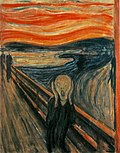 The Scream by Edvard Munch, often associated with anxiety and existential dread.

