Parsley: Difference between revisions
No edit summary Tags: mobile edit mobile web edit |
CSV import |
||
| Line 58: | Line 58: | ||
{{food}} | {{food}} | ||
<gallery caption="Parsley"> | |||
File:Petroselinum.jpg|Petroselinum | |||
File:ParsleyStem.jpg|Parsley Stem | |||
File:Parsley100.jpg|Parsley | |||
File:Parsley seeds(রাধুনি).JPG|Parsley Seeds | |||
File:صحن تبولة.JPG|Parsley Dish | |||
File:Petersilie ies.jpg|Petersilie | |||
File:Parsley bush.jpg|Parsley Bush | |||
File:Petroselinum neapolitanum flower.jpg|Petroselinum Neapolitanum Flower | |||
File:Parsley3.jpg|Parsley | |||
File:Flor de perejil.JPG|Flor de Perejil | |||
File:Parsley flower with pollinator.JPG|Parsley Flower with Pollinator | |||
File:CACIK (Basil, parsley, coriander).jpg|Parsley in Cacik | |||
</gallery> | |||
Revision as of 01:34, 20 February 2025
Introduction

Parsley (Petroselinum crispum) is a popular herb that is commonly used in culinary applications as well as traditional medicine. It is a member of the Apiaceae family and is native to the Mediterranean region. Parsley has been cultivated for thousands of years and is used in cuisines all over the world.
Varieties
There are two main varieties of parsley: curly-leaf and flat-leaf. Curly-leaf parsley (Petroselinum crispum var. crispum) has tightly curled leaves and a milder flavor, while flat-leaf parsley (Petroselinum crispum var. neapolitanum) has flat, serrated leaves and a stronger flavor. Both varieties are used in cooking and have similar health benefits.
Culinary Uses
Parsley is a versatile herb that can be used in a variety of dishes. It is often used as a garnish, but can also be incorporated into sauces, salads, soups, stews, and more. In Middle Eastern and Mediterranean cuisines, parsley is a key ingredient in tabbouleh, a salad made with bulgur wheat, parsley, tomatoes, onions, and mint. Parsley can also be used to make pesto or as a seasoning for roasted meats and vegetables.
Health Benefits
Parsley is not only a flavorful herb, but it also has a variety of health benefits. It is a good source of vitamins A, C, and K, as well as folate and iron. Parsley also contains antioxidants and has anti-inflammatory properties. Some studies have suggested that parsley may have benefits for bone health, digestive health, and immune function.
Medicinal Uses
Parsley has been used in traditional medicine for centuries to treat a variety of ailments. It has been used as a diuretic, to treat urinary tract infections, and to alleviate menstrual cramps. Parsley has also been used as a breath freshener and to treat digestive issues such as bloating and gas.
Preparation and Storage
Fresh parsley can be stored in the refrigerator for up to a week. To use, rinse the parsley leaves and pat them dry. Remove the stems and finely chop the leaves. Parsley can also be dried or frozen for later use. To dry parsley, hang it upside down in a well-ventilated area until it is completely dry, then store it in an airtight container. To freeze parsley, chop the leaves and store them in an ice cube tray with water or olive oil.
Gallery
-
 parsley leaves
 -
 Fresh parsley leaves
 -
 Dried parsley


._(33185713368).jpg)
References
<references>
name="NCBI">National Center for Biotechnology Information. (2022). Parsley. Retrieved from https://www.ncbi.nlm.nih.gov/books/NBK92775/
name="Healthline">Healthline. (2021). Parsley: Nutrition, Benefits, and How to Use It. Retrieved from https://www.healthline.com/nutrition/parsley
</references>
See Also
External Links
- How to Grow Parsley
- Parsley: Health Benefits, Uses, and Risks
- Antioxidant and Antimicrobial Activity of Parsley (Petroselinum crispum) Extracts

- Portal:Food | Glossary of healthy eating | UK Foods | US Foods | Dietary Supplements | Nutrition values of foods
- Encyclopedia of nutrition | Calorie Finder | Nutrition Database | Glycemic Index of Foods | Protein rich foods list
- Lists of food & drink articles
- Parsley
-
 Petroselinum
 -
 Parsley Stem
 -
 Parsley
 -
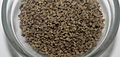 Parsley Seeds
 -
 Parsley Dish
 -
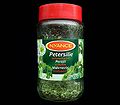 Petersilie
 -
 Parsley Bush
 -
 Petroselinum Neapolitanum Flower
 -
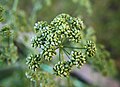 Parsley
 -
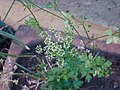 Flor de Perejil
 -
 Parsley Flower with Pollinator
 -
 Parsley in Cacik


.JPG)


.jpg)
