Algal nutrient solution: Difference between revisions
CSV import |
CSV import Tags: mobile edit mobile web edit |
||
| Line 6: | Line 6: | ||
File:Toxic_Algae_Bloom_in_Lake_Erie.jpg|Toxic Algae Bloom in Lake Erie | File:Toxic_Algae_Bloom_in_Lake_Erie.jpg|Toxic Algae Bloom in Lake Erie | ||
</gallery> | </gallery> | ||
== Algal Nutrient Solution == | |||
An '''algal nutrient solution''' is a specially formulated liquid medium used to cultivate [[algae]] in laboratory and industrial settings. These solutions provide the essential nutrients required for the growth and reproduction of various algal species. Algal nutrient solutions are critical in research, biofuel production, and the aquaculture industry. | |||
== Composition == | |||
Algal nutrient solutions typically contain a balanced mix of [[macronutrients]] and [[micronutrients]]. The primary macronutrients include nitrogen, phosphorus, and potassium, which are essential for cellular growth and energy transfer. Micronutrients such as iron, magnesium, and trace elements like zinc and copper are also included to support enzymatic functions and structural integrity. | |||
=== Macronutrients === | |||
* '''Nitrogen''' is often supplied in the form of nitrates or ammonium salts. It is a key component of amino acids, proteins, and nucleic acids. | |||
* '''Phosphorus''' is provided as phosphates, which are vital for [[ATP]] production and nucleic acid synthesis. | |||
* '''Potassium''' is important for osmoregulation and enzyme activation. | |||
=== Micronutrients === | |||
* '''Iron''' is crucial for photosynthesis and is often chelated to improve solubility. | |||
* '''Magnesium''' is a central component of the chlorophyll molecule. | |||
* '''Trace elements''' such as zinc, copper, and manganese are required in small amounts for various enzymatic processes. | |||
== Preparation == | |||
The preparation of an algal nutrient solution involves dissolving the appropriate amounts of nutrient salts in distilled or deionized water. The pH of the solution is adjusted to optimize nutrient availability and algal growth. Sterilization of the solution is often necessary to prevent contamination by unwanted microorganisms. | |||
== Applications == | |||
Algal nutrient solutions are used in a variety of applications: | |||
* '''Research''': In laboratory settings, these solutions are used to study algal physiology, genetics, and ecology. | |||
* '''Biofuel production''': Algae are cultivated in nutrient solutions to produce biomass for conversion into [[biofuels]]. | |||
* '''Aquaculture''': Algal cultures are used as a food source for [[aquatic organisms]] such as fish and shellfish. | |||
== Challenges == | |||
One of the main challenges in using algal nutrient solutions is preventing contamination by other microorganisms, which can outcompete the algae for nutrients. Additionally, the formulation of the nutrient solution must be tailored to the specific requirements of the algal species being cultivated. | |||
== Related Pages == | |||
* [[Algae]] | |||
* [[Photosynthesis]] | |||
* [[Biofuel]] | |||
* [[Aquaculture]] | |||
{{Algae}} | |||
{{Aquaculture}} | |||
[[Category:Algae]] | |||
[[Category:Aquaculture]] | |||
[[Category:Biotechnology]] | |||
Latest revision as of 00:42, 19 February 2025
-
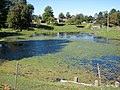 Algae pond
 -
 Photobioreactor xCubio PBR IGV Biotech
 -
 Solray Algae to Biofuels opening
 -
 Biodiesel
 -
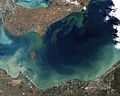 Toxic Algae Bloom in Lake Erie


Algal Nutrient Solution[edit]
An algal nutrient solution is a specially formulated liquid medium used to cultivate algae in laboratory and industrial settings. These solutions provide the essential nutrients required for the growth and reproduction of various algal species. Algal nutrient solutions are critical in research, biofuel production, and the aquaculture industry.
Composition[edit]
Algal nutrient solutions typically contain a balanced mix of macronutrients and micronutrients. The primary macronutrients include nitrogen, phosphorus, and potassium, which are essential for cellular growth and energy transfer. Micronutrients such as iron, magnesium, and trace elements like zinc and copper are also included to support enzymatic functions and structural integrity.
Macronutrients[edit]
- Nitrogen is often supplied in the form of nitrates or ammonium salts. It is a key component of amino acids, proteins, and nucleic acids.
- Phosphorus is provided as phosphates, which are vital for ATP production and nucleic acid synthesis.
- Potassium is important for osmoregulation and enzyme activation.
Micronutrients[edit]
- Iron is crucial for photosynthesis and is often chelated to improve solubility.
- Magnesium is a central component of the chlorophyll molecule.
- Trace elements such as zinc, copper, and manganese are required in small amounts for various enzymatic processes.
Preparation[edit]
The preparation of an algal nutrient solution involves dissolving the appropriate amounts of nutrient salts in distilled or deionized water. The pH of the solution is adjusted to optimize nutrient availability and algal growth. Sterilization of the solution is often necessary to prevent contamination by unwanted microorganisms.
Applications[edit]
Algal nutrient solutions are used in a variety of applications:
- Research: In laboratory settings, these solutions are used to study algal physiology, genetics, and ecology.
- Biofuel production: Algae are cultivated in nutrient solutions to produce biomass for conversion into biofuels.
- Aquaculture: Algal cultures are used as a food source for aquatic organisms such as fish and shellfish.
Challenges[edit]
One of the main challenges in using algal nutrient solutions is preventing contamination by other microorganisms, which can outcompete the algae for nutrients. Additionally, the formulation of the nutrient solution must be tailored to the specific requirements of the algal species being cultivated.
Related Pages[edit]
| Algae | ||||||||||
|---|---|---|---|---|---|---|---|---|---|---|
|
