Alcohol and cancer: Difference between revisions
No edit summary |
CSV import |
||
| Line 50: | Line 50: | ||
[[Category:Alcohol and health]] | [[Category:Alcohol and health]] | ||
[[Category:Cancer]] | [[Category:Cancer]] | ||
<gallery> | |||
File:Cancers-associated-with-drinking-alcohol-infographic.jpg|Cancers associated with drinking alcohol infographic | |||
File:Estimated-paf-in-2020-attributable-to-alcohol-drinking-both-sexes.png|Estimated PAF in 2020 attributable to alcohol drinking both sexes | |||
File:Alcohol_by_Country.png|Alcohol consumption by country | |||
File:Esophageal_adenoca.jpg|Esophageal adenocarcinoma | |||
File:BreastCancer.jpg|Breast cancer | |||
File:Colon_cancer_2.jpg|Colon cancer | |||
File:hepatocellular_carcinoma_1.jpg|Hepatocellular carcinoma | |||
File:Endometrial_adenocarcinoma_gross.jpg|Endometrial adenocarcinoma | |||
File:Duodenal_adenocarcinoma.png|Duodenal adenocarcinoma | |||
</gallery> | |||
Latest revision as of 11:47, 18 February 2025
Alcohol and Cancer[edit]

Alcohol and cancer refers to the relationship between the consumption of alcoholic beverages and the increased risk of developing certain types of cancer. Alcohol consumption is a well-established risk factor for several types of cancer, and the risk increases with the amount of alcohol consumed.
Mechanism of Carcinogenesis[edit]
Alcohol can contribute to cancer development through several mechanisms. One primary mechanism is the metabolism of alcohol to acetaldehyde, a toxic chemical and probable human carcinogen. Acetaldehyde can damage DNA and proteins, leading to mutations and cancer. Additionally, alcohol can increase the levels of certain hormones, such as estrogen, which can promote the development of hormone-sensitive cancers like breast cancer.
Types of Cancer Associated with Alcohol[edit]
Esophageal Cancer[edit]

Alcohol consumption is a major risk factor for esophageal cancer, particularly esophageal squamous cell carcinoma. The risk is further increased in individuals who also use tobacco.
Breast Cancer[edit]

There is a significant association between alcohol consumption and an increased risk of breast cancer. Even moderate alcohol intake can increase the risk, and the risk rises with higher levels of consumption.
Colorectal Cancer[edit]
Alcohol is a known risk factor for colorectal cancer. The risk is higher in individuals who consume large amounts of alcohol over time.
Liver Cancer[edit]

Chronic alcohol consumption can lead to liver cirrhosis, which significantly increases the risk of hepatocellular carcinoma, the most common type of liver cancer.
Other Cancers[edit]
Alcohol consumption is also associated with an increased risk of other cancers, including oral cavity, pharynx, larynx, and stomach cancer.
Epidemiology[edit]

The World Health Organization estimates that alcohol consumption is responsible for a significant percentage of cancer cases worldwide. The risk varies by region and is influenced by cultural and social factors that affect drinking patterns.
Prevention[edit]
Reducing alcohol consumption is a key strategy in cancer prevention. Public health campaigns often focus on raising awareness about the link between alcohol and cancer and encouraging individuals to limit their alcohol intake.
Related Pages[edit]
Gallery[edit]
-
 Alcohol consumption by country
 -
 Endometrial adenocarcinoma
 -
 Duodenal adenocarcinoma


-
 Cancers associated with drinking alcohol infographic
 -
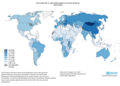 Estimated PAF in 2020 attributable to alcohol drinking both sexes
 -
Alcohol consumption by country
-
 Esophageal adenocarcinoma
 -
 Breast cancer
 -
 Colon cancer
 -
 Hepatocellular carcinoma
 -
Endometrial adenocarcinoma
-
Duodenal adenocarcinoma

