Alcohol monopoly: Difference between revisions
CSV import |
CSV import |
||
| Line 61: | Line 61: | ||
[[Category:Monopoly (economics)]] | [[Category:Monopoly (economics)]] | ||
[[Category:Public health]] | [[Category:Public health]] | ||
== Alcohol_monopoly == | |||
<gallery> | |||
File:Sodertalje5.JPG|Södertälje Systembolaget store | |||
File:Vinmonopolet_briskeby.jpg|Vinmonopolet store in Briskeby | |||
File:TTL_Convenience_Store_Baifu_20110621.jpg|TTL Convenience Store in Baifu | |||
File:Acs_mnsr_map_2006.GIF|Map of alcohol monopoly regions | |||
</gallery> | |||
Latest revision as of 04:40, 18 February 2025
Alcohol Monopoly
An alcohol monopoly is a government monopoly on the sale of alcoholic beverages, often with the aim of reducing alcohol consumption, controlling prices, and generating revenue for the state. These monopolies can exist at various levels, including production, distribution, and retail.
History[edit]
Alcohol monopolies have a long history, with some of the earliest examples dating back to the Middle Ages. Governments have often used monopolies as a means to control the production and sale of alcohol, both to limit consumption and to ensure a steady source of revenue.
Purpose[edit]
The primary purposes of alcohol monopolies include:
- Public Health: By controlling the sale of alcohol, governments aim to reduce alcohol-related harm, such as alcoholism, drunk driving, and alcohol-related diseases.
- Revenue Generation: Alcohol monopolies can be a significant source of income for governments, as they can set prices and collect taxes directly from sales.
- Regulation and Control: Monopolies allow governments to regulate the quality and distribution of alcohol, preventing illegal sales and ensuring compliance with alcohol laws.
Examples[edit]
Sweden[edit]
In Sweden, the state-owned company Systembolaget has a monopoly on the retail sale of alcoholic beverages with an alcohol content above 3.5%. This system is designed to limit alcohol consumption and promote public health.
Norway[edit]
Vinmonopolet is the Norwegian government-owned alcoholic beverage retailer. It has a monopoly on the sale of beverages with an alcohol content higher than 4.75%.
Finland[edit]
In Finland, Alko is the state-owned company that has a monopoly on the sale of alcoholic beverages containing more than 5.5% alcohol by volume.
United States[edit]
Some states in the United States, such as Pennsylvania and Utah, have state-run liquor stores that control the sale of alcohol. These are often referred to as "control states."
Economic Impact[edit]
Alcohol monopolies can have significant economic impacts, including:
- Price Control: Monopolies can set prices to discourage excessive consumption while ensuring affordability.
- Market Regulation: By controlling the market, monopolies can prevent the sale of counterfeit or unsafe alcohol products.
- Revenue: Monopolies provide a direct source of revenue for governments, which can be used to fund public services.
Criticism[edit]
Critics of alcohol monopolies argue that they can lead to:
- Limited Consumer Choice: Monopolies may restrict the variety of products available to consumers.
- Inefficiency: State-run monopolies may be less efficient than private enterprises.
- Black Market: High prices and limited availability can lead to the development of a black market for alcohol.
Related Pages[edit]
Gallery[edit]
-
 Map showing alcohol control states in the United States

Alcohol_monopoly[edit]
-
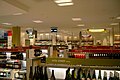 Södertälje Systembolaget store
 -
 Vinmonopolet store in Briskeby
 -
 TTL Convenience Store in Baifu
 -
Map of alcohol monopoly regions


