1-Fluoro-2,4-dinitrobenzene: Difference between revisions
CSV import |
CSV import |
||
| Line 40: | Line 40: | ||
[[Category:Biochemistry]] | [[Category:Biochemistry]] | ||
[[Category:Protein sequencing]] | [[Category:Protein sequencing]] | ||
<gallery> | |||
File:1-Fluoro-2,4-dinitrobenzene-3D-spacefill.png|1-Fluoro-2,4-dinitrobenzene 3D spacefill model | |||
File:Synthesis_Sanger's_reagent.svg|Synthesis of Sanger's reagent | |||
File:Frederick_Sanger2.jpg|Frederick Sanger | |||
File:Sanger_peptide_end-group_analysis.svg|Sanger peptide end-group analysis | |||
</gallery> | |||
Latest revision as of 04:52, 18 February 2025
1-Fluoro-2,4-dinitrobenzene[edit]

1-Fluoro-2,4-dinitrobenzene is an organic compound with the chemical formula C6H3FN2O4. It is commonly known as Sanger's reagent and is used in the field of biochemistry for the determination of amino acid sequences in proteins.
Structure and Properties[edit]
1-Fluoro-2,4-dinitrobenzene is a fluoroarene with two nitro groups at the 2 and 4 positions of the benzene ring. The presence of the electron-withdrawing nitro groups makes the fluorine atom highly reactive, allowing it to participate in nucleophilic aromatic substitution reactions.
Synthesis[edit]

The synthesis of 1-Fluoro-2,4-dinitrobenzene involves the nitration of fluorobenzene using a mixture of concentrated sulfuric acid and nitric acid. The reaction proceeds through an electrophilic aromatic substitution mechanism, where the nitro groups are introduced at the ortho and para positions relative to the fluorine atom.
Applications[edit]
1-Fluoro-2,4-dinitrobenzene is primarily used in the Sanger method for protein sequencing. It reacts with the amino groups of amino acids to form stable dinitrophenyl (DNP) derivatives. This reaction is utilized to label the N-terminal amino acid of a peptide, which can then be identified after hydrolysis of the peptide.
Historical Significance[edit]

The use of 1-Fluoro-2,4-dinitrobenzene in protein sequencing was pioneered by Frederick Sanger, who developed the method in the 1940s. This work was instrumental in the determination of the first complete amino acid sequence of a protein, insulin, and earned Sanger the Nobel Prize in Chemistry in 1958.
Mechanism of Action[edit]

The mechanism of action involves the nucleophilic attack of the amino group on the fluorine atom of 1-Fluoro-2,4-dinitrobenzene, resulting in the formation of a DNP-peptide. This reaction is specific to the N-terminal amino acid, allowing for its identification after peptide hydrolysis.
Related Pages[edit]
Gallery[edit]
-
 3D model of 1-Fluoro-2,4-dinitrobenzene
 -
 Synthesis of Sanger's reagent
 -
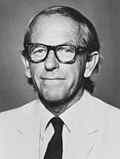 Frederick Sanger, developer of the Sanger method
 -
 Mechanism of peptide end-group analysis using Sanger's reagent
-
1-Fluoro-2,4-dinitrobenzene 3D spacefill model
-
Synthesis of Sanger's reagent
-
Frederick Sanger
-
Sanger peptide end-group analysis
