SDHA: Difference between revisions
CSV import |
CSV import |
||
| Line 39: | Line 39: | ||
[[Category:Medical genetics]] | [[Category:Medical genetics]] | ||
[[Category:Rare diseases]] | [[Category:Rare diseases]] | ||
<gallery> | |||
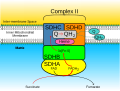
File:SuccDeh.svg|Succ Deh | |||
</gallery> | |||
Latest revision as of 06:14, 3 March 2025
SBDS
The SBDS gene is a critical component in human biology, primarily associated with the rare genetic disorder known as Shwachman-Diamond syndrome. This article provides an in-depth exploration of the SBDS gene, its functions, associated disorders, and its significance in medical research.
Overview[edit]
The SBDS gene is located on chromosome 7 at the 7q11 locus. It encodes a protein that is essential for the proper functioning of the ribosome, the cellular machinery responsible for protein synthesis. The SBDS protein is involved in ribosomal biogenesis and the maturation of the 60S ribosomal subunit.
Function[edit]
The primary function of the SBDS protein is to facilitate the assembly and stability of the ribosome. It plays a crucial role in the maturation of the 60S ribosomal subunit, which is necessary for the translation of mRNA into proteins. The SBDS protein is also implicated in cellular processes such as cell cycle regulation and response to cellular stress.
Clinical Significance[edit]
Mutations in the SBDS gene are known to cause Shwachman-Diamond syndrome, a rare autosomal recessive disorder characterized by exocrine pancreatic insufficiency, bone marrow dysfunction, and skeletal abnormalities. Patients with Shwachman-Diamond syndrome often present with neutropenia, anemia, and an increased risk of leukemia.
Shwachman-Diamond Syndrome[edit]
Shwachman-Diamond syndrome (SDS) is a multisystem disorder with a wide range of clinical manifestations. The most common features include:
- Hematological abnormalities: Neutropenia is the most frequent hematological finding, but patients may also experience anemia and thrombocytopenia.
- Pancreatic insufficiency: This leads to malabsorption and failure to thrive in affected individuals.
- Skeletal abnormalities: These can include metaphyseal dysostosis and short stature.
- Increased risk of malignancies: Particularly acute myeloid leukemia (AML) and myelodysplastic syndrome (MDS).
Genetics[edit]
The SBDS gene consists of five exons and spans approximately 7.9 kb of genomic DNA. It is highly conserved across species, indicating its essential role in cellular function. Mutations in the SBDS gene that lead to Shwachman-Diamond syndrome are typically point mutations, small deletions, or insertions that result in a loss of function of the SBDS protein.
Research and Therapeutic Approaches[edit]
Research into the SBDS gene and its associated protein is ongoing, with a focus on understanding the molecular mechanisms underlying Shwachman-Diamond syndrome and developing potential therapeutic strategies. Current approaches include gene therapy, small molecule drugs to enhance ribosomal function, and hematopoietic stem cell transplantation for severe hematological manifestations.
Also see[edit]
This medical genetics related article is a stub. You can help WikiMD by expanding it.
-
 Succ Deh


