Paupiette: Difference between revisions
CSV import |
CSV import Tags: mobile edit mobile web edit |
||
| Line 24: | Line 24: | ||
{{food-stub}} | {{food-stub}} | ||
== Paupiette == | |||
<gallery> | |||
File:Putenroulade.JPG|Putenroulade | |||
File:Paupiette_de_veau.JPG|Paupiette de veau | |||
</gallery> | |||
Latest revision as of 11:51, 25 February 2025


Paupiette is a term used in French cuisine to describe a type of meat dish that involves rolling a thin slice of meat around a filling of various ingredients, which can include more meat, vegetables, herbs, and sometimes rice or breadcrumbs. The meat used can be beef, pork, veal, or chicken. The rolled meat package is then tied with string or secured with a toothpick, browned in a pan, and cooked in a sauce. The sauce varies depending on the recipe and regional variations, but common sauces include tomato sauce, wine reduction, or a broth-based sauce. Paupiettes are similar to other meat dishes found in various cuisines, such as the Italian braciole, the German rouladen, and the Middle Eastern dolma.
Preparation[edit]
The preparation of paupiettes begins with selecting a thin slice of meat. The meat is then pounded to further thin it out and make it more pliable for rolling. The filling is prepared separately and can range from a simple mixture of herbs and spices to more complex combinations including minced meat, diced vegetables, and soaked breadcrumbs or rice for binding. The filling is spread over the meat, which is then rolled tightly and secured. The paupiettes are then browned in a pan with some oil or butter to develop flavor through Maillard reactions. After browning, they are cooked in a sauce, which can be made in the same pan to incorporate the flavors developed during browning. The cooking method is typically braising, a slow cooking process in a covered pot that ensures the meat becomes tender and the flavors of the sauce and filling meld together.
Regional Variations[edit]
Paupiettes are found in various forms across different regions of France and beyond. Each region may have its own traditional fillings and sauces, reflecting local ingredients and culinary preferences. For example, in some areas, paupiettes may be prepared with a filling that includes local cheeses or specific herbs endemic to the region. Additionally, the type of meat used can vary widely, with some regions preferring pork or veal over beef or chicken.
Serving[edit]
Paupiettes are typically served as a main dish, accompanied by a side of vegetables, potatoes (either mashed, boiled, or roasted), or rice. The sauce in which the paupiettes are cooked is often served as well, providing additional flavor to both the meat and the side dishes.
Cultural Significance[edit]
The dish holds a place in traditional French cuisine and is often associated with home cooking and comfort food. It showcases the French culinary principle of using simple ingredients to create flavorful and sophisticated dishes. Paupiettes can be found in both family dinners and on the menus of traditional French restaurants.
See Also[edit]

Paupiette[edit]
-
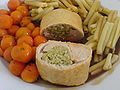 Putenroulade
 -
 Paupiette de veau
